(216) 373-7706
- Originally Published on January 5, 2026
Strategies for Responding to High-Stakes Online Reputation Attacks

Reputation attacks are increasing in frequency, sophistication, and damage potential. A single false accusation published online can cost you board positions, investor confidence, business partnerships, and millions in company valuation. What once required a media campaign now takes a single blog post. What once faded from memory now persists indefinitely in search results.
At Minc Law, we have defended hundreds of high-profile clients against reputation attacks. We have litigated over 350 cases in 26 states and 5 countries and removed over 200,000 pieces of defamatory content. This guide provides the assessment framework, response strategies, and legal options that work in high-stakes reputation defense.
Common Forms of Reputation Attacks
Reputation attacks take many forms. Understanding the type you face helps you deploy effective defenses.
Defamatory Online Content
False accusations are published on blogs, websites, complaint sites, or scam-report platforms, alleging fraud, criminal activity, professional incompetence, or ethical violations.
Coordinated Review Attacks
Waves of fake negative reviews on Google, Yelp, Glassdoor, or industry-specific platforms are designed to damage your business reputation or portray you as a toxic leader.
Social Media Smear Campaigns
Orchestrated efforts to spread damaging narratives through social media. These campaigns leverage hashtags, mentions, reaction videos, and shares to achieve viral distribution. Past statements or actions can resurface and be recontextualized to damage your current reputation.
Doxxing
The malicious publication of your private information (home address, phone numbers, family details, travel schedules, or financial information) with the intent to harass, intimidate, or enable physical threats.
Deepfakes and Manipulated Media
AI-generated fake videos or audio recordings depicting you saying or doing things you never did. As this technology becomes more accessible, deepfakes represent an emerging threat.
Ransomware and Data Breach Exploitation
Cybercriminals gain access to sensitive corporate data, personal communications, or compromising information, then threaten to release it unless demands are met.
Professional Undermining
Former business partners, fired employees, or competitors contact your board members, investors, clients, or industry associations with false allegations about your competence, ethics, or track record.
Example: Former Walgreens CFO Wade Miquelon filed a defamation lawsuit against former CEO Greg Wasson and director Stefano Pessina, claiming they defamed him in meetings with large shareholders. Miquelon claimed the defamation negatively affected his prospects for future employment.
Relationship-Based Attacks
Ex-spouses, former romantic partners, or estranged family members are spreading intimate or false information to destroy your public image.
Harassment and Physical Threats
Manchester United executive vice chairman Ed Woodward faced social media criticism that culminated in a mob attacking his home with flares while chanting death threats.
Social Engineering and Account Compromise
Cybercriminals create fake accounts or use social engineering tactics to gain access to personal information or compromise accounts. Phishing emails account for over 90% of successful cyberattacks.
Example: The hacker group OurMine found Mark Zuckerberg’s credentials in a LinkedIn database and used his password to briefly take over his Twitter and Pinterest accounts.
According to Facebook, 16% of accounts are duplicates or fakes. LinkedIn removed 21.6 million fake profiles in the first half of 2019 alone.
The 10 Critical Assessment Questions
When you discover you are under attack, work through these strategic questions before responding. Your answers determine whether you are facing a minor issue or an existential threat, and whether you need to respond publicly, privately, legally, or not at all.
1. What Is the Potential Risk?
Imagine in detail all the ways this attack could damage your future. Consider unlikely scenarios alongside probable ones. This is a comprehensive threat assessment, not catastrophizing.
Ask yourself: Could this cost me my position? Will investors lose confidence? Could this trigger a regulatory investigation? Might my family be endangered? Could this impact the company’s valuation or ability to secure financing? Will this affect future board seats or business opportunities?
By envisioning worst-case scenarios, you will not underestimate the attack’s potential damage.
2. How Visible Is the Attack?
Assess current reach and potential spread. Is it contained to a single platform or spreading across multiple channels? What is the domain authority and search ranking of the defamatory content? Has it been picked up by journalists or trade publications? Is it trending on social media? How many people have likely seen it? Does the platform lend itself to viral spread?
A hate-filled email to your inbox is different from content with 50,000 shares. Visibility determines urgency and response strategy.
3. Is the Source Credible?
Not all attackers carry equal weight. Consider: What is the attacker’s relationship to you? Do they have inside knowledge that would make their claims believable? What is their motivation? Do they have documentation or evidence? What is their own reputation and credibility?
A former CFO alleging accounting irregularities carries far more weight than an anonymous post. A credible source requires a more robust response strategy.
4. Does the Claim Tie to Your Stated Values?
If you have publicly championed certain values or built your brand around specific principles, attacks that expose hypocrisy or inconsistency will be far more damaging.
For example, a CEO who champions diversity is facing credible allegations of discrimination. A family values leader exposed for infidelity. A transparency advocate caught in a cover-up. An ethics-focused leader accused of financial impropriety.
When the attack contradicts your public persona, expect more skepticism from defenders and more enthusiasm from critics.
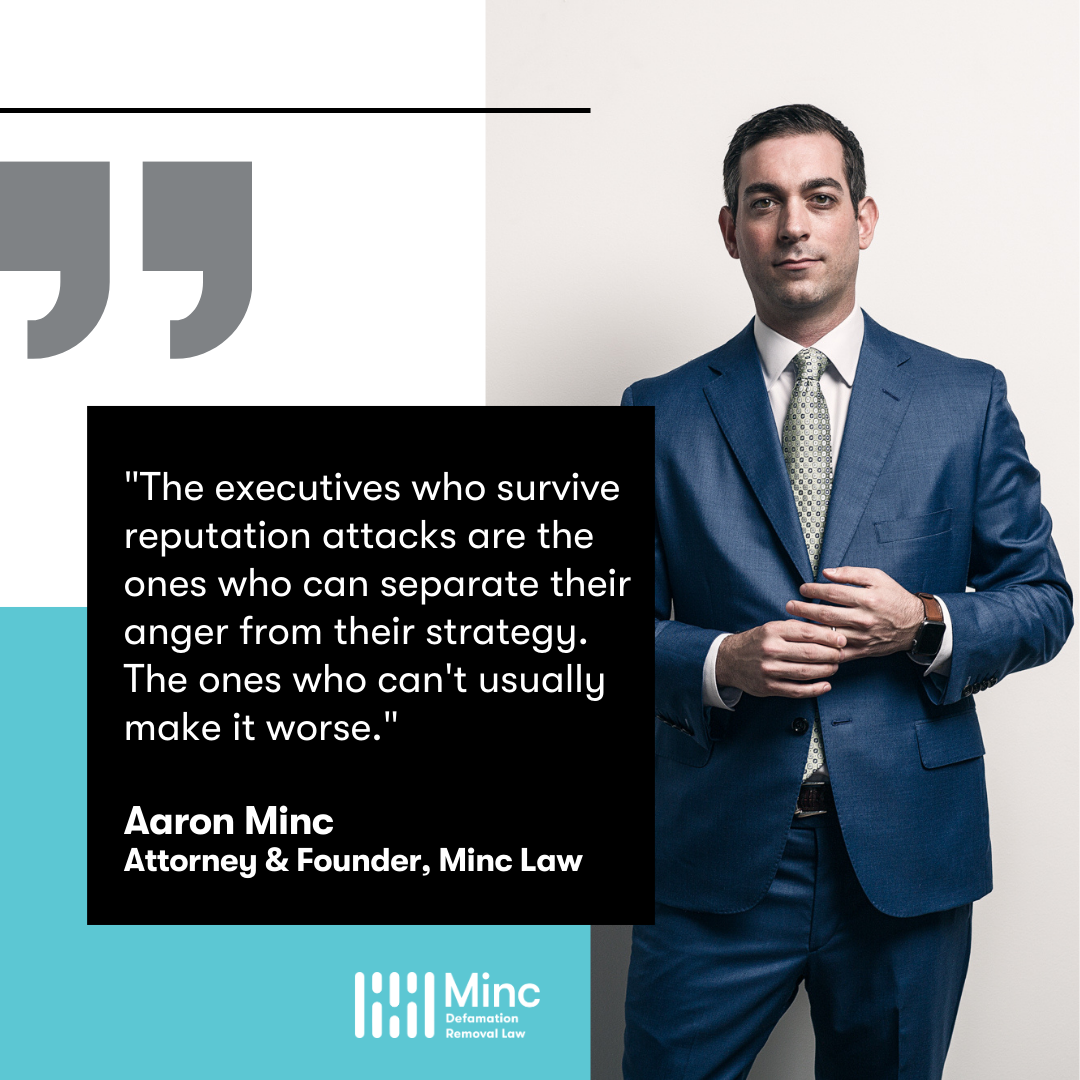
5. Can You Separate Emotion From Fact?
This is often the hardest step. You must distinguish between how you feel about the attack and what is actually happening.
Are you hurt by who is attacking you, or by what they are saying? Are feelings of betrayal clouding your assessment of actual risk? Is the attack objectively damaging, or does it just feel that way because it is personal? Are you reacting to tone or substance?
Consider engaging a trusted advisor, attorney, or reputation specialist for objective analysis. When emotions run high, outside perspective becomes invaluable.
6. Do You Need to Take Accountability?
This is one of the most strategically important questions. From a reputation management perspective, taking accountability can often diffuse attacks more quickly than fighting claims that have any basis in fact.
Is there truth in the accusations, even if exaggerated? Would taking partial responsibility strengthen your position? Will attempting to deny claims with some factual basis make you look defensive and untrustworthy? Could acknowledging mistakes and demonstrating corrective action win back stakeholder confidence more effectively than a combative stance?
Many of the biggest wins in online reputation management happened when companies acknowledged their mistakes and took public responsibility. This approach removes the attacker’s ammunition and allows you to control the narrative.
The strategic calculation here is about what response protects and rebuilds your reputation most effectively.
7. What Reparations Should You Make?
Beyond acknowledging responsibility, consider what concrete actions would demonstrate your commitment to making things right. Do affected parties deserve financial compensation? Should you implement new policies or oversight mechanisms? Would public commitments to change be appropriate? Are there systemic problems within your organization that need addressing?
Be cautious: poorly conceived reparations can create new legal or reputational liabilities. Always consult legal counsel before making offers of restitution, especially financial ones.
8. Who Else Do You Need to Involve?
Reputation attacks rarely exist in a vacuum. Consider your internal team: general counsel or external defamation attorney, board of directors, communications/PR team, executive protection/security team, HR department if employees are involved, IT/cybersecurity team if there is a technical component.
Consider external stakeholders: Are other people mentioned in the attack? Their responses must be coordinated with yours. Do clients or partners need proactive communication? Will competitors try to exploit this situation? Should you alert investors before they read about it elsewhere?
Consider specialized experts: defamation attorney if content is false and damaging, online reputation management firm for search suppression and content strategy, crisis communications specialist for message development and media training, cybersecurity expert if attack involves hacking, doxxing, or data breach.
9. Should You Ask Others to Advocate for You?
Mobilizing your network to publicly defend you is tempting, but proceed with caution. When you ask colleagues, board members, or friends to advocate for you publicly, you are asking them to stake their reputation on yours, expose themselves to potential criticism and scrutiny, and take on risk they did not create.
Only make this ask if you are absolutely certain of your innocence, the attack is clearly false and you have documentation to prove it, your advocates have direct knowledge of the situation, they are genuinely comfortable with public association with your crisis, and you have given them all relevant information so they will not be blindsided.
If your defenders are later proven wrong, you will have damaged their reputations along with your own.
10. What Changes Will You Make to Prevent Future Attacks?
Even if the current attack is unfounded, examine what made you vulnerable. Are your privacy settings and security protocols adequate? Have you been too trusting with business partners without proper vetting? Does your organization have insufficient controls or oversight? Have you strayed from your stated values in ways that create vulnerability? Is your social media presence creating unnecessary exposure? Do you have inadequate legal protections in contracts with partners and employees?
Use this crisis as an opportunity to strengthen your defenses.
Neutralizing the Threat: Four Common Pathways
Based on your assessment, you have four primary response pathways. Most situations require a combination of these approaches.
Path 1: Direct Negotiation and Removal
When to use this: The attacker is identifiable, the content appears on a platform with removal policies, or you have a pre-existing relationship with the attacker.
How it works: Contact the person who posted the content or the platform hosting it. Many platforms have policies against defamatory content, harassment, or policy violations. If you can demonstrate the content violates these policies, you may secure removal without litigation.
For individual attackers, assess whether the situation is salvageable. Can their discontentment be turned around? Is there any chance they will remove the content themselves? Direct negotiation should be calm and solution-focused, not combative. An open hand is better than a fist when attempting to have negative content removed.
Success factors: Clear policy violations, documented evidence the content is false, willingness of the platform or poster to engage, absence of malicious intent from the attacker.
Path 2: Legal Action
When to use this: The content is demonstrably false, causing measurable harm, and the attacker has assets or the ability to pay damages. Also appropriate when you need to unmask an anonymous attacker or obtain an injunction to stop ongoing attacks.
How it works: File a defamation lawsuit or pursue other applicable legal claims (false light, business disparagement, cyberstalking, extortion, etc.). Legal action serves multiple strategic purposes beyond winning damages: it stops ongoing attacks, unmasks anonymous attackers through subpoenas, creates settlement leverage, generates legal determinations that statements were false, obtains injunctions, and sends a deterrent message.
Success factors: Clear evidence of falsity, documented damages, defendant with ability to pay, statements made with actual malice or reckless disregard for truth, statute of limitations has not expired.
Timeline: Defamation statutes of limitations vary by state but can be as short as one year. Early consultation within 24-48 hours of discovering the attack is critical.
Path 3: De-Indexing From Search Engines
When to use this: Content cannot be removed from the source website, but it can be made invisible in search results. This is often more effective than suppression when applicable.
How it works: Use Google’s Results About You tool for personal information like addresses, phone numbers, or banking information. Submit DMCA takedown requests if content includes copyrighted material you own. Request removal under GDPR if you are an EU citizen. Use Google’s URL removal tool for content that violates Google’s policies.
Success factors: Content contains personal information, copyrighted material, or policy violations. You meet eligibility requirements for specific removal tools.
Path 4: Strategic Content Suppression
When to use this: De-indexing is not available, the publisher will not cooperate, content has spread too widely, or litigation is not appropriate.
How it works: Create high-quality positive content optimized for searches related to your name and strategically promote it to push negative content to page two or beyond of search results. Since 95% of users never look past page one, this effectively neutralizes the attack.
Suppression requires understanding who searches for you and why, then developing genuinely valuable content. This includes long-form articles demonstrating expertise, video content, guest posts on reputable publications, press releases, optimized social media profiles, speaking engagements, and professional contributions.
Success factors: Consistent execution over 3-12 months, high-quality content better than what currently ranks, placement on high-authority domains, authentic engagement and promotion.
Important: Google’s RankBrain system assesses content quality like humans do. Thin, promotional, or manipulative content will not rank well. Quality matters more than quantity.
What NOT to Do When Under Attack
Hasty, emotional responses often make reputation attacks worse. Avoid these approaches.
Do Not Send Aggressive Communications
Angry or threatening communications can be shared publicly, making you look like the aggressor and providing attackers with new material. Direct negotiation should be calm and solution-focused, not combative.
Do Not Engage in Public Arguments
Publicly defending yourself or arguing with attackers online almost always generates more negative content and keeps the story alive. Screenshots are forever, and context collapses on the internet.
Do Not Assume “Condemn, and Move On” Will Work
Pre-#MeToo crisis management often advised clients to condemn and move on. This advice was designed to minimize focus on the attack. Today, this can be unsuccessful if all aspects are not delicately considered.
When Reputation Attacks Become Legal Matters
Not every reputation attack requires legal intervention, but many do, especially those involving false statements that cause measurable harm. The following legal claims provide different paths to stopping attacks, removing content, and obtaining compensation.
Defamation
Defamation occurs when someone publishes a false statement of fact that damages your reputation. Defamation comes in two forms: libel (written defamation like articles, social media posts, reviews) and slander (spoken defamation like podcasts, videos, verbal statements).
To pursue a defamation case, you typically need to prove:
1. A false statement of fact (not opinion or true criticism)
2. Publication to third parties (shared with at least one other person)
3. Fault (the standard varies based on whether you are considered a public figure)
4. Damages (measurable harm to your reputation, career, or finances)
When to pursue defamation: You have clear evidence the statement is false, you can document measurable harm (lost job, lost contracts, quantifiable business damage), the statement was published to third parties, and you can prove the speaker knew it was false or acted recklessly.
Other Legal Claims for Reputation Attacks
Reputation attacks often involve additional causes of action beyond defamation. These provide alternative legal pathways when defamation standards are difficult to meet or when attacks involve conduct beyond false statements.
- False Light: When someone publishes information that portrays you in a misleading way even if no statement is technically false. Use this when the overall impression created is false even if individual facts are accurate.
- Intentional Infliction of Emotional Distress: When attacks are so extreme and outrageous that they cause severe psychological harm. Use this when conduct goes beyond normal bounds of decency.
- Business Disparagement: When false statements about your company, products, or services cause economic loss. Use this when the attack targets your business rather than you personally.
- Cyberstalking and Harassment: When attacks involve repeated, threatening, or obsessive behavior that causes fear or distress. Use this when the pattern of behavior is the issue, not just false statements.
- Computer Fraud and Abuse Act (CFAA): When attacks involve hacking, unauthorized access to accounts, or theft of information. Use this for technical intrusions.
- Extortion and Blackmail: When attackers threaten to publish damaging information unless you pay them. Use this when demands for money or concessions are made.
- Violation of Right of Publicity: When someone uses your name, image, or likeness for commercial purposes without permission. Use this when your identity is being exploited commercially.
The Strategic Value of Legal Action
Filing a lawsuit is not just about winning damages, though substantial awards are possible. Legal action serves multiple strategic purposes:
- Stops ongoing attacks by making continued defamation more costly and risky
- Unmasks anonymous attackers through subpoena power
- Creates settlement leverage that often leads to content removal and retractions
- Generates legal determinations that statements were false, providing official vindication
- Obtains injunctions preventing future attacks and requiring removal of existing content
- Sends a deterrent message to other potential attackers
When to Bring in Legal Counsel
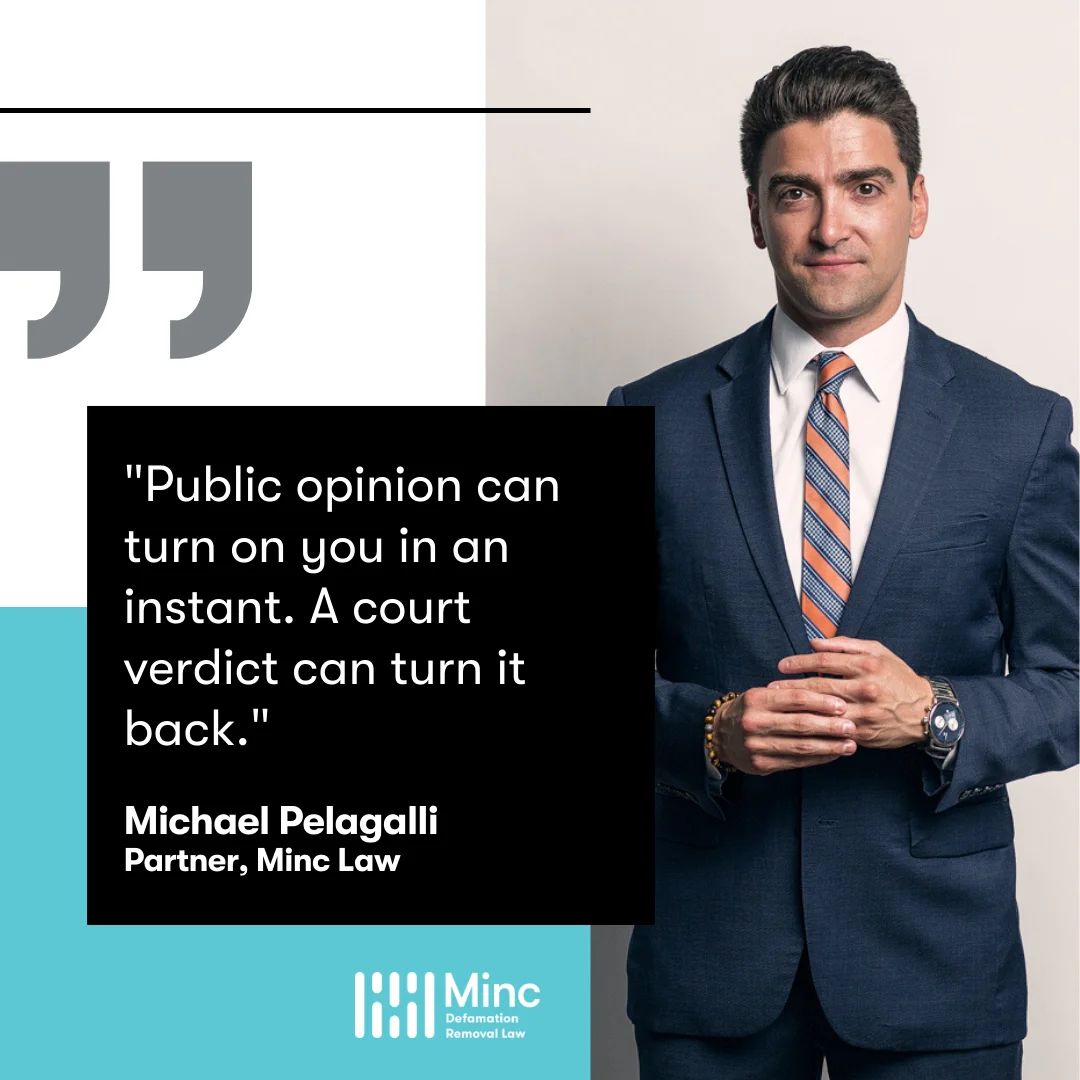
Do not wait until a reputation attack becomes a full-blown crisis to consult an attorney. The ideal time to engage legal counsel is within the first 24-48 hours after discovering serious defamatory content, especially if it is spreading rapidly or appearing in high-visibility locations.
Early legal involvement allows your attorney to preserve critical evidence before it disappears, send cease and desist letters that often resolve matters without litigation, advise on response strategy to avoid statements that could harm later legal action, identify anonymous attackers while digital trails are fresh, and file emergency motions for injunctions when attacks are ongoing.
Defamation statutes of limitations vary by state but can be as short as one year. Missing these deadlines eliminates your legal options entirely.
Case Studies: Successful Reputation Defense
Different reputation attacks require different responses. These cases demonstrate how various strategies led to successful outcomes.
Gibson’s Bakery v. Oberlin College (2019)
The Attack: In November 2016, three Black students at Oberlin College were arrested following a shoplifting incident at Gibson’s Bakery. After the arrests, the students and campus activists alleged they were racially profiled. The Oberlin College administration facilitated massive student protests, distributed flyers calling the 132-year-old family business a “racist establishment,” and suspended the college’s long-standing purchasing contract with the bakery. These actions caused the bakery’s revenue to plummet and severely damaged its standing in the community.
The Response: Gibson’s Bakery filed a defamation and tortious interference lawsuit against Oberlin College. During the legal process, the three students involved pleaded guilty to misdemeanor charges (attempted theft and aggravated trespassing) and signed formal statements acknowledging that the bakery’s actions were not racially motivated. The bakery’s legal team presented evidence that the college administration had actively participated in the smear campaign, including a dean of students who personally handed out defamatory flyers.
The Outcome: In 2019, a jury originally awarded the Gibson family $44 million in damages. Due to Ohio’s statutory caps on punitive damages, this was later reduced to $25 million, plus attorney fees and interest. After years of appeals, the Ohio Supreme Court declined to hear the case in 2022, effectively ending the litigation. In December 2022, Oberlin College paid the family a total of $36.59 million (representing the $25 million judgment plus accumulated interest and legal fees).
Johnson & Johnson (1982)
The Attack: In September 1982, seven people in the Chicago area died after consuming Extra-Strength Tylenol capsules laced with potassium cyanide. The tampering occurred at the retail level, where someone removed bottles from shelves, added the poison, and replaced them. At the time, Tylenol held a dominant 37% market share and contributed 17% of the company’s net earnings. The incident presented an existential threat to the brand, as consumer trust evaporated overnight and the company faced a total collapse of its flagship product.
The Response: Under the leadership of CEO James Burke, Johnson & Johnson executed what is now considered the most successful crisis management strategy in history. They ignored legal advice to limit liability and instead prioritized public safety by issuing a nationwide recall of 31 million bottles—a move that cost the company over $100 million. They offered free exchanges for solid tablets and cooperated fully with the FBI. Crucially, within six months, J&J reinvented the industry standard by introducing triple-seal tamper-evident packaging and shifting production from hollow capsules to solid “caplets” to prevent future tampering.
The Outcome: Tylenol’s market share plummeted from 37% to 7% in the weeks following the tragedy, but remarkably recovered to 30% within a year. The company’s decision to place its “Credo” (which prioritized customers over shareholders) at the center of its response actually strengthened its long-term reputation. This event led to the 1983 Federal Anti-Tampering Act and established the permanent requirement for tamper-resistant packaging on all over-the-counter medications.
Johnny Depp v. Amber Heard (2022)
The Attack: Amber Heard published a 2018 op-ed in The Washington Post describing herself as a “public figure representing domestic abuse.” Although the piece did not name Johnny Depp, Depp alleged it clearly referred to him and was defamatory. Consequently, Depp was asked to resign from the Fantastic Beasts franchise and lost his leading role in the Pirates of the Caribbean series.
The Response: Depp filed a $50 million defamation lawsuit in Virginia. During the televised 2022 trial, his team presented audio recordings and witness testimony to contradict Heard’s allegations. Heard countersued for $100 million, alleging Depp’s former lawyer defamed her by calling her abuse claims a “hoax.”
The Outcome: The jury found Heard liable for defaming Depp on all three counts, originally awarding him $15 million ($10 million compensatory and $5 million punitive). However, the judge reduced the total to $10.35 million due to Virginia’s legal cap on punitive damages. Heard was awarded $2 million on one of her counterclaims.
Frequently Asked Questions
Is it a crime to ruin someone’s reputation?
Ruining someone’s reputation is typically not a criminal matter in the United States. Defamation is a civil tort, meaning victims pursue compensation through civil lawsuits rather than criminal prosecution.
Can I sue someone for ruining my reputation?
Yes, you can sue someone for ruining your reputation through defamation if they published false statements of fact that caused you measurable harm. You must prove the statement was false, published to third parties, made with fault (negligence or actual malice), and caused damages. Other legal claims include false light, business disparagement, intentional infliction of emotional distress, and violation of right of publicity, depending on the circumstances.
How do you prove reputational damage?
You prove reputational damage by documenting measurable harm caused by false statements. This includes lost employment or job opportunities, decreased business revenue with before-and-after comparisons, terminated contracts or lost clients with specific dollar amounts, withdrawal of board positions or speaking engagements, and increased costs for reputation repair or legal fees.
How much can you sue for reputational damage?
Reputational damage awards vary widely based on the severity of harm and the defendant’s assets. Compensatory damages cover actual losses like lost income, business revenue, and opportunities. Punitive damages punish particularly malicious conduct. Settlement amounts are often confidential but can range from tens of thousands to millions, depending on the case.
Next Steps
At Minc Law, we focus exclusively on internet defamation and online reputation protection. We have litigated over 350 cases across 26 states and 5 countries, removed over 200,000 pieces of defamatory content, and secured millions in settlements and judgments for clients.
When you engage our firm, we move quickly. We assess your situation, identify your strongest legal options, and develop a strategy designed to stop the attack and remove the content. We handle anonymous attackers through subpoenas and investigative techniques. We negotiate directly with publishers and platforms when appropriate. We file lawsuits when necessary and pursue every available remedy, including injunctions, monetary damages, and criminal complaints when attacks involve extortion or hacking.
Our clients include CEOs, founders, board members, investors, and other high-profile individuals who need sophisticated legal representation delivered with discretion. We understand the unique pressures you face and the speed at which reputation attacks can escalate.
If you are facing a reputation attack, contact us for a confidential consultation. We will assess your situation, explain your legal options, and outline a clear path forward.
Contact Minc Law at (216) 373-7706 or by using the contact form below.
Get Your Free Case Review
Fill out the form below, and our team will review your information to discuss the best options for your situation.
This page has been peer-reviewed, fact-checked, and edited by qualified attorneys to ensure substantive accuracy and coverage.