(216) 373-7706
- Originally Published on August 19, 2025
How to Document Evidence of Defamation

False statements online can spread quickly, damaging reputations and creating lasting consequences. For individuals and businesses alike, one defamatory post, review, or article can lead to lost opportunities, financial harm, and personal stress. But when your reputation is attacked, how do you properly document the evidence you’ll need to protect your rights?
At Minc Law, we’ve handled thousands of internet defamation and online reputation matters, giving us unmatched experience in collecting, preserving, and presenting evidence in court. Our attorneys focus exclusively on internet defamation and content removal, allowing us to identify the most effective documentation and how to build a strong foundation for your case.
In this guide, you’ll learn:
- The essential elements of defamation you must prove,
- How to collect and preserve different forms of evidence,
- Tools and techniques for documenting digital content,
- Strategies for managing witnesses and quantifying damages, and
- Why ongoing monitoring is critical to protecting your reputation.
Understanding the Legal Framework for Evidence Documentation
When documenting defamation, you must prove these essential elements:
- Publication: The statement was communicated to at least one other person
- Falsity: The statement is factually incorrect, not just opinion
- Harm: You suffered actual damage to your reputation or finances
- Lack of privilege: The statement wasn’t made in a legally protected context
Beyond these basic elements, you’ll also need to consider the standard of fault that applies to your case. Public figures must prove “actual malice” that the defendant knew the statement was false or acted with reckless disregard for the truth. Private individuals typically need only to prove negligence, but the evidence requirements differ significantly between these standards.
The burden of proof in defamation cases is typically “by a preponderance of the evidence,” meaning you must show it’s more likely than not that each element occurred. Your documentation strategy should aim to exceed this threshold substantially, as strong evidence often leads to favorable settlements and reduces litigation costs.
Advanced Evidence Categories and Documentation Techniques
Evidence falls into two main categories: direct and circumstantial. Direct evidence proves the defamatory statement occurred without requiring interpretation, like an audio recording of someone making the false statement or an eyewitness account from someone who heard it firsthand. Circumstantial evidence supports your case through logical inference, such as proving who owns a website where defamatory content appeared or establishing a pattern of malicious behavior.
Forms of Evidence in Modern Defamation Cases
- Testimonial Evidence. This includes witness statements, expert opinions, and your own testimony about the impact of defamation. Modern testimonial evidence often involves social media witnesses—people who saw defamatory posts, shared them, or commented on them. Document not just what witnesses observed, but their credibility factors: their relationship to you and the defendant, their social media presence, and any potential biases.
- Documentary Evidence. Any written materials containing defamatory content, including emails, social media posts, articles, text messages, or printed publications. In today’s digital landscape, this category has expanded to include metadata, server logs, cached pages, and even deleted content recovered through forensic techniques.
- Physical Evidence. Tangible objects related to defamation, such as printed materials, devices used to spread false statements, or physical manifestations of reputational harm like cancelled contracts or returned products.
- Demonstrative Evidence. Charts, timelines, network analysis diagrams, or other visual aids that help illustrate how defamation spreads and its impact. Modern demonstrative evidence might include social media influence maps, viral spread patterns, or financial impact visualizations.
Digital Forensics and Metadata Preservation
Modern defamation cases increasingly rely on digital forensics. Metadata, the hidden information embedded in digital files, can reveal when content was created, modified, or accessed. This includes EXIF data in images showing camera settings, GPS coordinates, and timestamps, email headers revealing routing information and server timestamps, social media metadata showing edit histories and original post times, and website analytics demonstrating reach and impact of defamatory content.
Use specialized tools like ExifTool to extract and preserve metadata. For court admissibility, maintain a strict chain of custody documentation for all digital evidence. Generate cryptographic hash values (MD5, SHA-256) for all digital files immediately upon collection to prove the file hasn’t been altered since collection.
Comprehensive Immediate Documentation Protocol
Time is your most critical resource when documenting defamation evidence. Online content can be deleted within minutes, witnesses’ memories begin degrading immediately, and the viral nature of modern communication means defamatory content can spread globally before you even become aware of it.
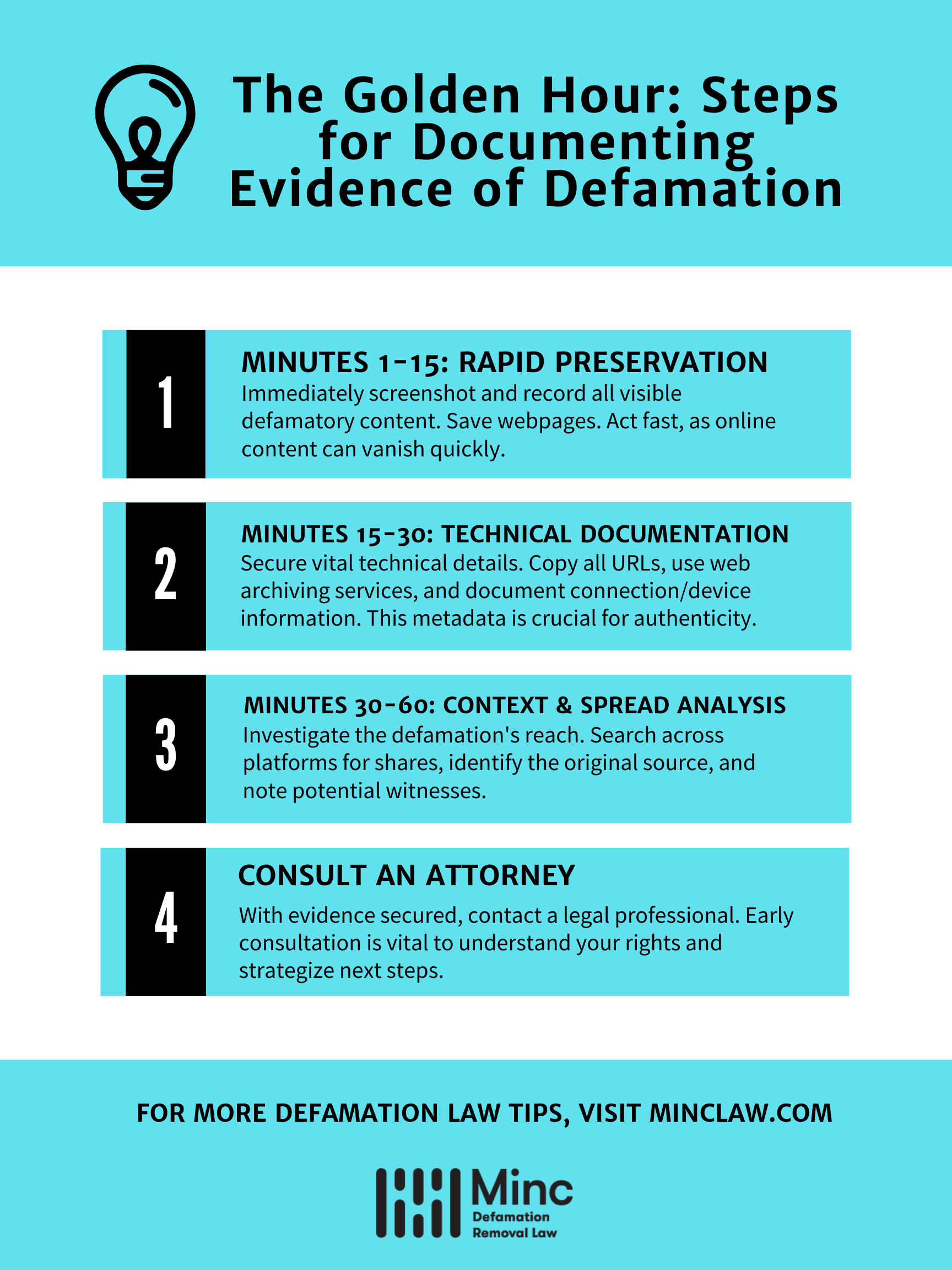
The “Golden Hour” Documentation Strategy
Treat the first hour after discovering defamation like emergency responders treat trauma cases. Your immediate actions can determine the ultimate success of your case.
- Minutes 1-15: Rapid Preservation Screenshot or photograph everything visible on your screen, (make sure to expand full posts and comments), use your phone to record video of scrolling through the defamatory content, save the webpage using your browser’s “Save As” function, and take photos of any physical materials with a timestamp visible. Download copies of videos or reels using tools like PageVault or a reputable, free tool such as 4K Video Downloader.
- Minutes 15-30: Technical Documentation Copy and paste URLs into a text document, use web archiving services like Archive.org, Archive.today, and Perma.cc, check if the content appears in Google’s cache, and document your internet connection details and device information. If the defamatory content appears on a platform like Facebook or a review site, make sure to capture the post URL along with the profile URL of the individual who posted the content.
- Minutes 30-60: Context and Spread Analysis Search for the content across multiple platforms, check if it’s been shared, commented on, or republished, document the original source and any amplification, and begin identifying potential witnesses.
Advanced Digital Preservation Techniques
Defamatory content rarely exists in isolation. Check Facebook, Twitter, Instagram, LinkedIn, TikTok, Reddit, and industry-specific platforms. Use social media monitoring tools like Minc Law’s Digital Risk Protection, Hootsuite, Sprout Social, or Brand24 to track mentions across platforms simultaneously.
Don’t just save the current page when using the Wayback Machine. Check if earlier versions exist that show the evolution of defamatory content. Sometimes, defendants modify their statements to appear less harmful, and historical versions can prove the original, more damaging content.
Use your browser’s developer tools (F12 in most browsers) to capture the page’s HTML source code. This preserves content that might not appear in screenshots, such as hidden metadata or dynamically loaded content. For high-stakes cases, consider professional digital preservation services like Hanzo Archives or PageFreezer, which provide legally admissible captures with enhanced metadata and chain of custody documentation.
Witness Documentation and Management
Witnesses are often the linchpin of successful defamation cases, but managing witness evidence requires sophisticated strategies beyond simply collecting statements.
Witness Categories and Strategic Value
- Primary Witnesses: People who directly observed the defamatory statement being made or published. These witnesses provide the strongest testimonial evidence but require careful preparation to ensure their testimony remains consistent and credible.
- Impact Witnesses: Individuals who can testify to how the defamatory statements affected your reputation, relationships, or business. This includes clients who withdrew business, colleagues who changed their behavior toward you, or community members who altered their opinion based on the false statements.
- Character Witnesses: People who can establish your reputation before the defamation occurred. These witnesses help quantify the damage by showing the contrast between your pre- and post-defamation standing.
- Expert Witnesses: Professionals who can provide specialized knowledge about damages, digital forensics, or industry standards.
Common experts in defamation cases include digital forensics specialists for authenticating online evidence, reputation management professionals for quantifying reputational harm, economic experts for calculating financial damages, mental health professionals for emotional distress claims, and industry experts for professional reputation impacts.
Advanced Witness Interview Techniques
When interviewing witnesses, use structured approaches that maximize the value of their testimony. The funnel technique starts with open-ended questions like “Tell me everything you remember about that day” and gradually narrows to specific details such as “What exact words did you hear?” This approach captures comprehensive information while ensuring key details aren’t missed.
Work with witnesses to build detailed timelines of events using calendar apps, social media posts, and other digital breadcrumbs to help witnesses recall specific dates and sequences. Identify how different witnesses’ accounts support each other by looking for consistent details across multiple testimonies, but also document any discrepancies that need to be addressed.
Financial and Reputational Damage Documentation
Proving damages in defamation cases requires meticulous documentation that goes far beyond basic financial records. Courts recognize both economic and non-economic damages, but quantifying reputational harm presents unique challenges.
Economic Damage Categories
Direct financial losses include lost employment income with detailed salary and benefit calculations, decreased business revenue with month-over-month comparisons, lost contracts or clients with specific dollar amounts, increased costs for reputation management or legal fees, and medical expenses for treating emotional distress.
Opportunity costs encompass job opportunities that were withdrawn or never materialized, business partnerships that were cancelled or avoided, speaking engagements or consulting opportunities lost, and investment opportunities that became unavailable. Don’t forget mitigation expenses such as public relations campaigns to counter false statements, legal fees for cease and desist letters, reputation monitoring services, and professional counseling or therapy costs.
Quantifying Reputational Harm
Reputational damage is often the most significant but hardest to quantify aspect of defamation. Document changes in your social media engagement, follower counts, and sentiment analysis of comments using tools like Brandwatch, Mention, or Socialbakers to provide detailed analytics showing reputational impact over time.
Monitor how defamatory content affects your online presence by documenting where negative content appears in search results for your name and tracking changes over time. Use tools like SEMrush or Ahrefs to analyze search visibility and reputation changes. In LinkedIn and other professional networks, track connection requests, endorsements, and professional opportunities, documenting any patterns that correlate with the timing of defamatory statements.
Different industries have unique reputation indicators. For professionals, this might include peer citations, speaking invitations, or board appointments. For businesses, it could include customer reviews, industry rankings, or partnership opportunities.
Digital Evidence Authentication and Chain of Custody
Modern courts are increasingly sophisticated about digital evidence requirements. Proper authentication and chain of custody documentation can make the difference between admissible evidence and excluded materials.
Use Network Time Protocol synchronized timestamps and document the time zone and daylight saving time status. Consider using blockchain-based timestamping services for additional authentication. Document the specific device, operating system, browser version, and screen resolution used to capture evidence, as this information helps establish the technical context for screenshots and recordings.
Record your IP address, internet service provider, and connection type when collecting online evidence. This information can be crucial for establishing jurisdiction and authenticity.
Professional Chain of Custody Protocols
Maintain detailed logs showing who handled evidence, when, and for what purpose. Include digital signatures or other authentication methods for each entry. Use encrypted storage solutions with access controls and audit trails, and consider professional evidence management systems used by law enforcement and legal professionals.
When sharing evidence with attorneys or experts, document the transfer method, encryption used, and recipient confirmation. Use secure file transfer services rather than email attachments to maintain security and create proper documentation trails.
Advanced Investigation Techniques
Professional defamation cases often require investigation beyond basic evidence collection. These advanced techniques can uncover crucial evidence and strengthen your case significantly.
Digital Footprint Analysis
Use tools like Social Searcher, Pipl, or Spokeo to build comprehensive profiles of defendants. Look for patterns of behavior, previous defamatory statements, or evidence of malicious intent that can support your case or establish a pattern of conduct.
Use WHOIS databases, domain history tools, and website analytics to identify anonymous defendants or prove ownership of defamatory websites. Tools like DomainTools or SecurityTrails provide comprehensive domain intelligence that can reveal hidden connections or ownership structures.
Map relationships between defendants and their associates using social media connections, shared IP addresses, or common website registrations. This can reveal coordinated defamation campaigns or identify additional defendants who may be liable for damages.
Content Analysis and Pattern Recognition
Professional linguistic analysis can identify authorship patterns, especially useful for anonymous online defamation. Experts can analyze writing style, vocabulary, grammar patterns, and other linguistic fingerprints to establish who created defamatory content.
Look for patterns in when defamatory content is posted, shared, or amplified. These patterns can reveal coordination between multiple defendants or suggest automated bot activity that might indicate a more sophisticated defamation campaign.
Use IP geolocation, social media check-ins, and other geographic indicators to establish where defamatory content originated and spread. This information can be crucial for establishing jurisdiction and understanding the scope of publication.
Ongoing Monitoring and Documentation
Defamation cases don’t end with initial evidence collection. Ongoing monitoring and documentation can reveal additional damages, new defamatory statements, or evidence of the defendant’s continued malicious behavior.
Automated Monitoring Systems
Set up comprehensive Google Alerts for your name, business, and related keywords, including common misspellings and variations. Use tools like Minc Law’s Digital Risk Protection, Hootsuite, Sprout Social, or Mention to monitor mentions across multiple social media platforms automatically.
For comprehensive coverage, consider professional reputation monitoring services like Reputation.com, BirdEye, or ReviewTrackers that provide more sophisticated monitoring capabilities and detailed reporting.
Damage Evolution Documentation
Regularly document how defamatory statements continue to affect your reputation, relationships, and finances. This ongoing documentation can support claims for continuing damages and demonstrate the persistent nature of reputational harm.
Document your efforts to mitigate damages through reputation management, public relations, or other means. This shows you’re acting reasonably to minimize harm while also demonstrating the ongoing impact and the resources required to address it.
As you work to rebuild your reputation, document the time, effort, and resources required. This information supports damage calculations and demonstrates the long-term impact of defamation on your personal and professional life.
Technology Tools and Resources
Leverage both free and professional-grade tools to enhance your evidence documentation capabilities.
Free and Low-Cost Tools
For enhanced screenshot capabilities with annotation features, use tools like Greenshot or Snagit. Archive.today, Perma.cc, and the Internet Archive’s Wayback Machine provide web archiving services for preserving online content. ExifTool extracts metadata from images and documents, while social media platforms’ own export tools can provide comprehensive account data.
Professional Tools
For a comprehensive digital investigation, consider tools like Cellebrite, Oxygen Detective, or X-Ways Forensics. E-discovery platforms such as PageVault, Relativity, Logikcull, or Everlaw help manage large volumes of electronic evidence.
Case management systems like Clio, MyCase, or PracticePanther help organize evidence and case materials in a professional, legally compliant manner.
International and Cross-Border Considerations
Modern defamation often crosses international boundaries, creating complex jurisdictional and evidence collection challenges that require specialized approaches.
Document where defamatory content is hosted using tools like IP geolocation services and server analysis tools. Establish the defendant’s location through social media profiles, business registrations, IP addresses, and other digital footprints. Document where the defamatory statements were viewed, shared, or caused harm, as this can affect which courts have jurisdiction over your case.
For evidence located in foreign countries, understand Hague Convention procedures for international evidence collection. Different countries have varying privacy laws, data protection regulations, and evidence collection requirements that can affect your documentation strategy. Foreign language evidence requires certified translation and additional authentication procedures for court admissibility.
Working with Legal Professionals
While this guide provides comprehensive documentation strategies, defamation cases benefit significantly from professional legal guidance, especially in complex or high-stakes situations.
When to Consult an Attorney
Consider consulting an attorney within the first 24-48 hours after discovering defamation, especially if the statements are spreading rapidly or causing immediate harm. Defamation statutes of limitations vary by jurisdiction and can be as short as one year, so early legal consultation ensures you don’t miss critical deadlines.
Cases involving public figures, international defendants, anonymous speakers, or significant damages require specialized legal expertise from the outset due to their complexity and the sophisticated legal strategies they demand.
Attorney-Client Collaboration
Establish secure methods for sharing evidence with your attorney that maintain privilege protections and chain of custody requirements. Work with your attorney to coordinate professional investigations, expert witness retention, and discovery planning to ensure all efforts support your overall case strategy.
Collaborate on overall case strategy, including whether to pursue litigation, settlement, or alternative dispute resolution, as the strength of your evidence documentation will significantly influence these strategic decisions.
Conclusion
Successful defamation cases are built on meticulous evidence documentation that begins immediately upon discovering false statements and continues throughout the legal process. By following these comprehensive strategies, you’ll create a solid evidence base that not only supports your legal claims but also positions you for favorable settlements and successful litigation outcomes.
Get Your Free Case Review
Fill out the form below, and our team will review your information to discuss the best options for your situation.
This page has been peer-reviewed, fact-checked, and edited by qualified attorneys to ensure substantive accuracy and coverage.