(216) 373-7706
- Originally Published on January 19, 2026
Legal Steps Clinicians Should Take When Falsely Accused of Misconduct

Being falsely accused of professional misconduct as a medical professional can threaten everything you have worked years to build. In the age of viral social media, a single TikTok video, Facebook post, or Google review can reach millions of people in hours. A false accusation can destroy your practice, damage your reputation, cost you hospital privileges, and even result in the loss of your medical license before you have a chance to tell your side of the story.
Recent cases show just how quickly things can spiral. In one widely publicized incident, a woman posted a 25-part TikTok series claiming her psychiatrist manipulated her emotions, garnering over six million views on the first video alone. Whether accurate or not, such allegations can devastate a healthcare career. Many medical professionals facing false accusations ask the same urgent question: what legal steps can I take to protect my career and reputation?
The answer depends on where the accusation appears and what type of false statements are being made, but legal options exist to defend yourself and pursue removal of defamatory content.
If you are facing false accusations as a medical professional, you are not powerless. At Minc Law, we focus exclusively on protecting the online reputations of businesses and individuals. Our attorneys have extensive experience representing medical professionals facing false accusations and defamatory attacks, and we understand the unique legal and ethical constraints healthcare providers face, particularly HIPAA requirements. In this article, we explain the legal pathways available when facing false accusations, why HIPAA makes responding complicated, and the critical steps you should take to protect your practice.
Why False Accusations Are Particularly Damaging for Medical Professionals
Medical professionals operate in a high-trust industry where reputation is paramount. Research shows that 72% of patients begin their search for a doctor on the internet, and 85% trust online reviews as much as personal recommendations. In this environment, even a single false accusation can have serious consequences.
A 2021 study found that a single negative review can repel 22% of prospective patients. When your star rating drops below two stars, only 13% of customers remain willing to engage with your practice. The financial impact can be substantial and immediate.
Beyond lost revenue, false accusations can trigger:
- Licensing board investigations that can suspend or revoke your ability to practice
- Hospital privilege restrictions or terminations
- Malpractice insurance rate increases or coverage denials
- Patient loss as current and prospective patients lose confidence
- Damaged peer relationships as colleagues distance themselves
False accusations against healthcare providers do not only come from disgruntled patients. They can originate from colleagues harboring professional jealousy, former employees seeking revenge, competitors attempting to damage your practice, hospital administrators involved in disputes, or anonymous sources on the internet. The accusation might appear as an online review, a social media post, a complaint to your state medical board, a lawsuit, or a workplace investigation.
Above All: Do Not Engage With the Post or Accusation
When you discover a viral post, negative review, or false accusation about your practice, emotions take over. Reading comments from people who do not know the full story can feel like a personal attack. Your instinct may be to defend yourself publicly, correct the record, or confront your accuser directly.
Do not do this.
For healthcare professionals, the risks of immediate public response are far higher than for other business owners. Unlike other industries where business owners sometimes respond to negative posts to apologize or set the record straight, you have ethical and legal obligations around patient confidentiality and duty of care that make public responses far more complicated and potentially damaging.
Before taking any public action, consult with an attorney who understands both defamation law and the unique restrictions medical professionals face, particularly HIPAA requirements. Any statement you make can potentially be used against you later, and even well-intentioned explanations can be taken out of context or result in HIPAA violations that create additional legal exposure.
Immediate Steps When You First Learn of a False Accusation
The first steps you take matter significantly. Legal professionals who work with medical professionals facing false accusations typically advise clients to take a measured, strategic approach.
Document Everything Immediately
While you should avoid making public statements without legal guidance, you should immediately begin preserving relevant documentation. This includes any communications with the accuser, relevant medical records (if applicable), scheduling or billing records, and any prior concerning behavior by the accuser.
If the accusation appears online, take screenshots immediately with visible timestamps. Online content can be edited or deleted, so capturing everything in its original form is critical. Document the number of views, shares, comments, and the reach of the false statements.
Consult with an Online Defamation Attorney
Finding and hiring an attorney who specializes in online defamation and content removal should be your next priority. This specialization is critical because these attorneys understand the intersection of several complex legal areas that general practice attorneys may not be familiar with.
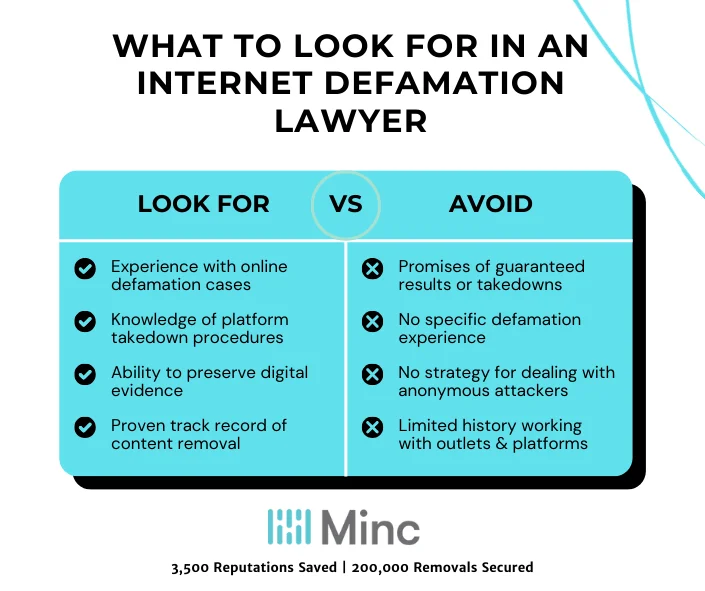
An online defamation attorney experienced in representing medical professionals will understand:
- HIPAA’s privacy restrictions and how they limit your response options
- Section 230 immunity and why you cannot sue platforms directly
- The specific terms of service for major review platforms and how to effectively appeal for content removal
- John Doe litigation procedures for unmasking anonymous online posters
- The new FTC rules on review suppression while pursuing legitimate legal claims
- Statute of limitations issues that could bar your claims if you wait too long
- Emergency injunction procedures to stop ongoing publication
Time is critical. In most states, defamation claims must be filed within one to three years of the initial publication, with some states having statutes as short as one year. Waiting too long can eliminate your legal options entirely.
The HIPAA Problem: Why Medical Professionals Cannot Respond Like Other Businesses
One of the most important distinctions for medical professionals is that HIPAA’s privacy rule significantly restricts how you can respond to accusations, particularly those made by patients.
Many medical professionals mistakenly believe that when a patient publicly discusses their care and makes specific allegations, they can respond with specifics to defend themselves. This is incorrect.
HIPAA Does Not Recognize Implied Waiver
Even when a patient publicly discloses that they received care from you and discusses specific treatments, you cannot confirm the physician-patient relationship or discuss any details without violating HIPAA. Your state medical board’s ethical rules also typically prohibit such disclosure.
If you violate HIPAA while attempting to defend yourself, you have committed an actual violation, giving regulators legitimate grounds for action against you. This creates a separate legal problem on top of the false accusation you are already facing.
HIPAA-Compliant Public Responses
If you choose to respond publicly to an online review or social media accusation, attorneys experienced in this area typically recommend responses that stick to general statements about your practice.
Examples of appropriate responses include:
- “We strive to deliver excellent care to all of our patients.”
- “Due to privacy regulations, we do not openly discuss any such concerns on this forum. Please contact our office if you have any further comments or suggestions.”
- “Thank you for your feedback. We are committed to continuous improvement in patient care. Please call our office to discuss this matter privately.”
What you cannot do is acknowledge that the reviewer was a patient, discuss individual treatments, or reference specific allegations raised in the review. Even apologizing can violate HIPAA because it suggests or implies that there is a patient who needs to be apologized to.
The Exception for Non-Patients
There is one important exception. HIPAA rules only govern the relationship between a medical care provider and their patient. If you genuinely have no record of the reviewer as a patient and suspect it may be a competitor or impersonator, you can suggest that possibility without violating HIPAA.
A response such as “We have no records of you as a patient. Please contact our office to discuss this review” would not violate HIPAA because you are not disclosing any protected health information or revealing the existence of a physician-patient relationship.
Private Resolution Options Before Litigation
Before considering formal legal action, there are several private resolution strategies that attorneys may pursue on behalf of medical professionals facing false online accusations.
Cease and Desist Letters
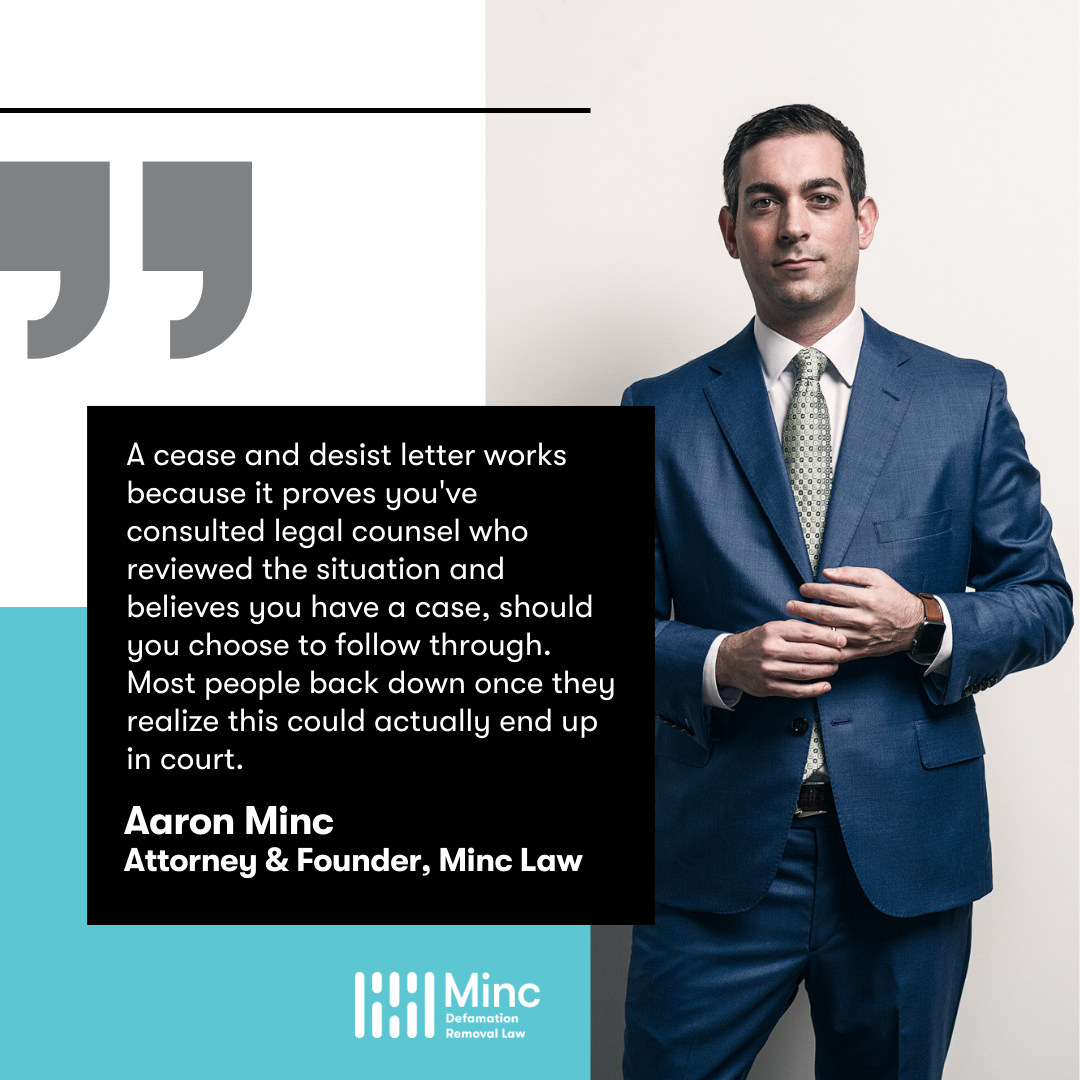
Lawsuits are lengthy and expensive. A cost-effective first step for many situations is for an attorney to draft and issue a cease and desist letter.
A cease and desist letter is a formal demand that the recipient stop a specific action immediately. These legal notices are common first steps to resolve problems quickly and without involving the courts. They are typically only a couple of pages and outline why the action must cease and give notice that the sender may pursue legal remedies if the recipient does not comply.
While cease and desist letters do not legally require the recipient to comply, they may convince the patient to remove the post or refrain from posting further to avoid being dragged into court. The letters essentially threaten legal action if compliance does not occur.
However, not all recipients take these letters seriously. In some cases, they might even publicize the letter online to portray themselves as victims or rally support. This can escalate the situation and increase the reach of the original post. When that happens, or when reputational damage has already occurred, a lawsuit may be the only way to seek meaningful relief.
The New FTC Rule on Review Suppression
There is an important limitation to be aware of. A new FTC rule prohibits businesses from using unfounded or groundless legal threats, physical threats, intimidation, or coercion to force the removal of negative reviews.
An “unfounded or groundless” legal threat essentially means any claim you would have based on the review would be frivolous. Your demand must be based on a legitimate legal claim, such as defamation or fraud.
Alternatively, the letter can be phrased as a request without any threat of litigation, which is permissible under the FTC rule.
Appealing to the Platform
Each online platform has terms of service that users agree to follow. Violations can sometimes result in content removal, though platforms are not required to remove content simply because terms have been violated.
Common terms of service violations include:
- Publishing more than one review of the same business under multiple accounts
- Accusations of serious criminal conduct
- Discriminatory or explicit content
- Doxing (posting private information about someone)
- False and misleading information
However, there is a significant limitation. While almost every platform prohibits false and misleading information, most platforms will not play “judge and jury” on whether content is actually false. They typically direct you to obtain a court order, which requires filing litigation.
Why You Cannot Sue the Platform Itself
Many people facing negative online reviews ask why they cannot sue the platform that hosts and displays the content. The answer lies in Section 230 of the Communications Decency Act.
Section 230 provides online platforms with absolute immunity when content is posted by third parties. This immunity applies to user-generated content websites, including review sites like Google, Yelp, Healthgrades, and Vitals, as well as social media platforms like TikTok, Facebook, and Instagram. You must sue the individual who posted the content, not the platform.
Direct Communication with the Accuser
When the identity of the accuser is known, and it is a former patient, some situations may be appropriate for direct communication. However, this requires careful handling to avoid HIPAA violations and escalation.
Attorneys who work in this area note that good customer service can still be effective. Patients want to be heard, and when they feel dismissed, it often makes situations worse. The goal is the removal of the false content, not winning an argument.
When a Lawsuit Becomes Necessary
Litigation should generally be a last resort, but it may be necessary when other options have failed and the false accusations are causing significant damage.
Understanding Defamation Claims
To succeed in a defamation lawsuit, you must prove five core elements:
- A false statement of fact: The statement must contain false assertions of fact, not opinion or hyperbole
- About you: The statement was about you specifically
- Publication: The statement was published to third parties
- Fault: The statement was made with at least negligence (or actual malice if you are a public figure)
- Damages: The statement caused measurable harm, whether reputational or economic
If you are a public figure or have a large social media following, you must meet a higher legal standard known as “actual malice.” Under this standard, you must show the poster either knew the statement was false or acted with reckless disregard for the truth.
Defamation Per Se: When Harm Is Presumed
Proving reputational harm can be difficult. You typically need to show that the statement damaged your professional standing, hurt your relationships, or cost you business opportunities.
However, the law recognizes certain types of statements as so inherently damaging that harm is presumed. This is called defamation per se. In most states, these categories include:
- A false statement that a person acted unethically or dishonestly in their profession or business
- A false statement that someone engaged in sexual misconduct
- A false statement claiming that a person is professionally incompetent or unable to perform their job
- A false statement accusing someone of committing a crime
- A false statement claiming that someone has a severe infectious or loathsome disease
When false accusations fall into these categories, courts presume reputational harm occurred. You still need to prove that the statement was factually false and that the other elements of defamation are met, but you do not need to provide extensive evidence of specific damages.
Common Defenses to Defamation Claims
It is important to understand what defenses the poster might raise against your claim.
Truth: If the poster can provide evidence that the statement is substantially true, your claim will fail, regardless of the damage to your reputation or business. Minor inaccuracies will not make a statement defamatory if it is substantially true.
Opinion: The U.S. Constitution protects pure expressions of opinion. As long as the opinion does not imply false facts, the poster’s statements will not be considered defamatory. Courts look at whether the statement can be objectively proved or disproved through evidence.
Understanding these defenses helps you assess the strength of your potential case before investing in litigation.
Unmasking Anonymous Accusers
When the accuser posts anonymously or under a pseudonym, you may not know who to sue. In these situations, attorneys can file what is called a John Doe lawsuit.
The lawsuit looks like an ordinary defamation complaint, but uses a placeholder name for the defendant. After filing, attorneys issue subpoenas to the platforms where the content was published to obtain user data such as names, phone numbers, addresses, or IP addresses. This user data typically allows identification of the anonymous poster.
Once the person is identified, you can assess whether they are a legitimate patient, a competitor, a former employee, or someone else, which helps determine the appropriate next steps.
Emergency Injunctions to Stop Ongoing Publication
If you are concerned about a patient continuing to post additional defamatory content while you are preparing your lawsuit, your attorney can petition the court to grant a preliminary injunction.
If granted, the court will require the patient to take down the posts, stop posting further content on the matter, or both. Unlike a cease and desist letter, injunctions are court orders that the recipient must comply with. Failure to do so could result in serious consequences, such as fines or contempt of court charges.
This can be particularly important when facing a multi-part viral series or an ongoing campaign of false accusations that continues to damage your reputation while you build your legal case.
The Single Publication Rule
In the context of online content, most states follow the “single publication rule.” This means that the initial post of defamatory content is considered a single act. Multiple claims cannot be brought against those who access or further distribute the post. The primary focus is on the party that initially communicated or posted the content.
This means that even if a false accusation is shared thousands of times or goes viral, you typically can only sue the original poster, not everyone who reshared or commented on the content.
Statute of Limitations: Time Is Critical
It is essential to act quickly. Defamation lawsuits must be filed within a specific time period after the initial publication of the false statements. This statute of limitations for defamation claims varies by state but typically ranges from one to three years, with some states having periods as short as one year.
Available Legal Remedies
If you pursue litigation and succeed, several types of remedies may be available:
Monetary Damages: Compensation for reputational harm, lost income, future earnings, emotional distress, and costs incurred in addressing the situation. In cases where the accuser acted with malice or reckless disregard for the truth, punitive damages may also be available.
Court Declaration: A judicial finding that the statements were false and defamatory can be extremely valuable for reputation repair purposes, even if monetary recovery is limited. This court order legally establishes that the accusations were lies, providing you with documentation to share with patients, hospital administrators, licensing boards, and others. Many attorneys emphasize that this declaration can function as both a shield and sword for defending yourself and repairing your reputation moving forward.
Injunctive Relief: Court orders requiring the removal of the false content and prohibiting the person from republishing the same defamatory material.
Important Considerations Before Filing Suit
Attorneys who handle these cases emphasize that litigation should only be pursued after a comprehensive assessment of multiple factors.
Litigation is expensive and can cost a significant amount through trial. The process takes time, often one to three years. Outcomes are uncertain, and even strong cases can have unexpected results.
Even if you win completely, there is the question of collectibility. If the defendant has no assets or income, you cannot collect on a judgment. Defamation is typically an intentional tort, so insurance usually will not cover the judgment.
There is also the risk of what is known as the Streisand Effect, where litigation creates additional attention and publicity around the false accusations. This is an important consideration that should be discussed thoroughly with legal counsel.
Building and Protecting Your Online Reputation
Beyond addressing specific false accusations, medical professionals should consider proactive strategies for building and maintaining a strong online reputation.
Best Practices for Online Presence
Attorneys and reputation professionals who work with medical professionals typically recommend several foundational practices:
Professional Website: Build, design, and maintain a professional website where you control the narrative. Through your own website, you control what information patients see. The site should be user-friendly and feature your credentials, academic background, experience, specialties, and any recognitions or certifications.
Search Engine Optimization: If patients cannot find your website, it provides no benefit. Effective SEO techniques ensure your professional website and other positive content rank highly in search results.
Online Directories: Maintain accurate and regularly updated information on online directories such as Google My Business, Yelp, WebMD, and Vitals. These function as the modern Yellow Pages and enhance your credibility while boosting your visibility in search results.
Patient Reviews: Encourage positive reviews from satisfied patients. These reviews are instrumental in shaping your online presence and provide valuable information to prospective patients about your communication skills, bedside manner, and overall patient satisfaction.
Requesting Positive Reviews
Medical professionals often wonder if they can ask patients to leave positive reviews or five-star ratings. The answer is yes. There is no ethical rule against asking patients for positive ratings or positive reviews.
Building a substantial base of positive reviews is important because 50 positive reviews can help balance one negative review, whereas if you only have one negative review with no positive reviews, that is all prospective patients will see.
Take Action to Protect Your Professional Standing
Being falsely accused of misconduct is deeply challenging, but legal options exist to defend your reputation and protect your practice. The key is understanding both what you can and cannot do under HIPAA, knowing when to pursue private resolution versus litigation, acting quickly before statutes of limitations expire, and building a strong online presence proactively.
If you are facing false accusations of any kind, consulting with qualified legal counsel who understands the unique challenges medical professionals face is essential. Do not engage with posts or accusations without guidance. Do not wait until it is too late to pursue your legal options. The decisions you make early can significantly impact the outcome of your situation.
At Minc Law, our team has extensive experience helping medical professionals navigate false accusations and online defamation. We understand the intersection of HIPAA, defamation law, and online reputation management. Contact us today by phone at 216-373-7706 or through the contact form below to discuss your situation and explore your legal options.
Get Your Free Case Review
Fill out the form below, and our team will review your information to discuss the best options for your situation.
This page has been peer-reviewed, fact-checked, and edited by qualified attorneys to ensure substantive accuracy and coverage.