(216) 373-7706
- Originally Published on December 18, 2025
Can You Sue a Competitor for Fake Reviews or Testimonials?

A growing number of businesses are discovering that online reviews and testimonials are not always what they appear to be. In competitive industries, some companies attempt to gain an advantage by fabricating reviews, publishing fake testimonials, or presenting misleading endorsements as independent customer feedback.
If your business has been impacted, you may be feeling frustrated, angry, or unsure of what to do next. Fake reviews and testimonials can erode trust, divert customers to competitors, and cause measurable financial harm. You may be wondering whether the content violates the law, whether it can be removed, and whether there is any meaningful recourse against the competitor responsible.
At Minc Law, we focus exclusively on online defamation and digital reputation disputes. Our attorneys regularly represent businesses harmed by competitor-driven misconduct, including fake reviews and fabricated testimonials. Depending on the facts, this conduct may give rise to claims for defamation, false advertising, unfair competition, or a combination of these legal theories. This article explains when competitor-generated reviews or testimonials may be legally actionable, what steps you can take, and how an attorney can help stop deceptive practices and protect your business.
Fake Reviews and Testimonials Are Often a Competitor Issue
Fake reviews are frequently treated as a reputation management problem, but many cases involve intentional interference by competitors. Businesses sometimes discover that misleading reviews or testimonials are not coming from customers at all, but from competing companies seeking to influence purchasing decisions through deception.
When competitors use fake reviews or testimonials as part of their marketing or advertising efforts, the issue can extend beyond reputation damage and into defamation, false advertising, or unfair competition.
What Counts as Fake Reviews or Testimonials by a Competitor?
Not every negative review or promotional statement is illegal. The key factors are whether the content is false or misleading and whether it is created, controlled, or directed by a competitor.
The following sections explain how courts and attorneys typically analyze these situations.
The Role of Control and Deception
Control is central to determining whether reviews or testimonials are legally problematic. Content may cross the line when a competitor creates reviews directly, instructs others to post them, or otherwise controls their substance while presenting them as independent customer feedback.
Deception occurs when reviews, testimonials, or endorsements misrepresent their source, authenticity, or accuracy in a way that influences customer decisions or harms another business’s reputation.
Common Examples of Competitor-Driven Fake Reviews or Testimonials
Competitor misconduct can take many forms. Some businesses post fake negative reviews about rivals, while others generate fake positive reviews for themselves. In other cases, companies publish fabricated testimonials or customer quotes on their websites and present them as genuine experiences.
There are also situations where endorsements are attributed to real people who never approved them, or where customer feedback is heavily edited or invented to appear authentic. What ties these practices together is the use of false credibility signals to gain a competitive advantage.
When Fake Reviews or Testimonials Become a Legal Issue
Fake reviews or testimonials become legally significant when they contain false statements of fact and function as commercial speech intended to influence purchasing decisions between competing businesses. At that point, the focus shifts from whether the content is unfair to whether it is false, misleading, and harmful.
Courts and regulators look beyond the wording of the review or testimonial and examine who is responsible for it, how it is being used, and whether it distorts fair competition or damages a business’s reputation.
Defamation, False Advertising, and Unfair Competition
Depending on the facts, competitor-driven fake reviews or testimonials may be addressed under different legal theories. When false reviews make untrue factual accusations that harm a business’s reputation, they may constitute defamation. When the same conduct is used to mislead customers and gain an unfair advantage, it may also qualify as false advertising or unfair competition.
Which legal theory applies depends on who created or controlled the content, what the statements say, how they are used, and the type of harm involved. In some cases, more than one claim may apply.
Fake Reviews vs. Opinions, Puffery, and Legitimate Feedback
The law draws important distinctions between protected speech and deceptive or defamatory conduct. Understanding these differences is critical for determining whether legal action is appropriate.
What Is Usually Not Actionable
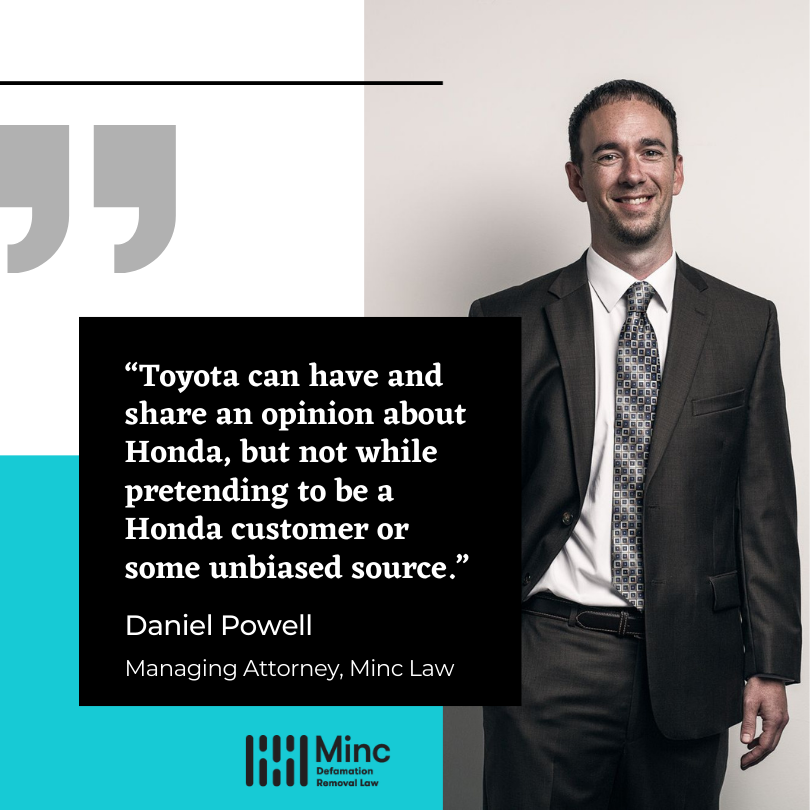
Legitimate customer opinions, even when negative, are generally protected. Subjective statements, exaggerations, and vague promotional language — often referred to as puffery — typically do not qualify as defamation or false advertising.
Customer dissatisfaction or harsh criticism alone does not automatically create legal liability.
What May Be Actionable
Problems arise when reviews, testimonials, or endorsements are fabricated, impersonated, or intentionally misleading. Coordinated review campaigns driven by competitors, fake customer identities, or testimonials presented as independent when they are not may give rise to defamation, false advertising, or unfair competition claims.
The key difference is whether the content misrepresents reality in a way that harms reputation or distorts competition.
How Competitor Fake Review and Testimonial Cases Are Typically Addressed
When businesses suspect competitor-driven fake reviews or testimonials, the response usually begins with careful evaluation rather than immediate confrontation. Understanding the scope of the activity and the harm involved is essential before deciding how to proceed.
Each situation is fact-specific, and the appropriate response depends on the evidence and business impact.
Investigation and Evidence Preservation
Identifying who controls the reviews or testimonials is often the first step. This may involve preserving screenshots, documenting timelines, and analyzing patterns that suggest competitor involvement.
Early evidence preservation can be critical, especially when deceptive or defamatory content may be removed or altered once challenged.
How an Attorney Can Help Address Competitor-Driven Fake Reviews or Testimonials
When fake reviews or testimonials are tied to a competitor’s marketing or advertising efforts, a lawyer’s role goes beyond requesting content removal. These cases often require a broader strategy aimed at stopping deceptive or defamatory conduct and preventing ongoing harm.
An attorney may investigate whether a competitor is responsible, evaluate whether the activity is best addressed as defamation, false advertising, unfair competition, or a combination of these claims, and determine what legal options are available based on the facts.
Potential Legal Paths and Outcomes
Competitor-driven fake reviews and testimonials can give rise to several potential remedies when legal standards are met. These may include efforts to stop deceptive or defamatory practices, require corrective actions, or seek compensation for business losses caused by the misconduct.
In appropriate cases, businesses may pursue injunctive relief, monetary damages, or other court-ordered measures designed to restore fair competition and protect reputation. Some matters can be resolved without litigation, while others require formal legal action to stop ongoing harm.
Frequently Asked Questions About Competitor Fake Reviews
Businesses dealing with suspected competitor-driven fake reviews often have the same urgent questions. The answers below focus on when legal action may be possible and when it makes sense to speak with an attorney.
Can you sue a competitor for fake Google reviews?
Yes, in certain circumstances, a business may be able to sue a competitor for fake Google reviews. Fake reviews may give rise to defamation claims, false advertising claims, or both, depending on what the reviews say and the role of any competitors involved.
What if I suspect my competitor is behind fake reviews but can’t prove it?
Lack of proof at the outset does not necessarily prevent legal action. In many cases, an attorney can help investigate patterns, preserve evidence, and determine whether reviews can be traced to a competitor or someone acting on their behalf.
What if the fake reviews are posted anonymously?
Anonymous reviews do not automatically prevent legal action. In appropriate cases, attorneys may use legal tools such as subpoenas to seek identifying information about reviewers, particularly when there is evidence suggesting competitor involvement.
Should I report fake reviews to Google before contacting a lawyer?
Reporting fake reviews to Google is often an important first step, but it may not resolve the issue if the activity is ongoing, defamatory, or competitor-driven. If reviews persist or escalate, speaking with an attorney can help you evaluate additional legal options.
When should I talk to an attorney about competitor review manipulation?
If a competitor is using fake reviews, testimonials, or endorsements to mislead customers, harm your reputation, or interfere with fair competition, you do not necessarily have to accept the damage as a cost of doing business online.
Minc Law is a U.S. law firm focused exclusively on internet defamation and online reputation disputes. Our attorneys have represented businesses nationwide in addressing competitor-driven deception and pursuing legal remedies when appropriate.
If you believe a competitor is manipulating reviews or testimonials to harm your business, contact Minc Law for a confidential case evaluation. You can call (216) 373-7706 or complete the contact form below to discuss your options and determine the most effective path forward.
Get Your Free Case Review
Fill out the form below, and our team will review your information to discuss the best options for your situation.
This page has been peer-reviewed, fact-checked, and edited by qualified attorneys to ensure substantive accuracy and coverage.