(216) 373-7706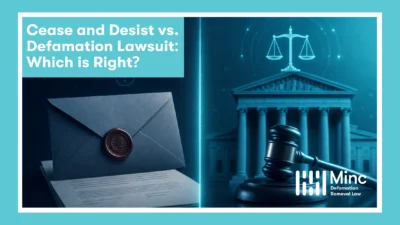
- Originally Published on June 5, 2026
Cease and Desist Letter vs. Defamation Lawsuit: Which Is Right?

When false statements about you start spreading online, the first instinct is usually the right one: stop the bleeding. The harder question is how. Most people end up choosing between two tools, a cease and desist letter or a full defamation lawsuit. Both can work. They just work in different situations, on different timelines, and at very different costs.
At Minc Law, our attorneys send cease and desist letters and file defamation lawsuits every week. Picking the right one matters, because the wrong choice can waste months, drain a budget, or, in some cases, make the situation worse. This guide walks through when each path makes sense, the risks people often overlook, and how the two work together when one is not enough.
What a Cease and Desist Letter Actually Does
A cease and desist letter is a formal written demand that tells the recipient to stop publishing false or unlawful statements, remove the content, and refrain from doing it again. It is sent by a private party or, far more effectively, by their attorney. A cease and desist letter is a formal warning, not a court order, so it does not carry independent enforcement power. What it does carry is notice. It puts the recipient on the record that their statements are false and harmful, and that often changes the calculus on the other side.
To do real work, the letter has to be specific. A credible cease and desist letter identifies the parties, lists the false statements with exact URLs, ties them to a specific legal theory like libel or slander, documents the harm, and demands a clear action within a defined deadline, usually seven to fourteen days.
Cease and Desist or Demand Letter
A cease and desist cannot force the other side to pay you anything. But many cease and desist letters double as demand letters, opening the door to a negotiated settlement where the offending party voluntarily agrees to remove the content, issue a retraction, and sometimes pay damages to avoid a lawsuit. That is often where these matters actually resolve.
When a Cease and Desist Letter Is the Right Call
For a large share of online defamation matters, a well-drafted cease and desist letter is the safest, fastest, and most cost-effective opening move. It can resolve a dispute in weeks rather than the six to eighteen months a defamation lawsuit typically takes, and it generally costs in the range of $3,500 to $10,000 in attorney fees compared to the much higher cost of full litigation.
It is also more discreet. A cease and desist letter starts as a private communication between the parties. While that privacy is not guaranteed, the recipient can post the letter publicly or share it with the press, but it is far less exposed than a lawsuit, which is filed in public court records and easily indexed by search engines.
A cease and desist letter tends to fit best when:
- The defamer is identifiable and reachable
- The offender may not realize their statements are legally actionable, and a clear warning from counsel may be enough to resolve it
- You want to build a record of notice that supports a later “actual malice” argument if the conduct continues
- Litigation costs are not justified by the size of the harm or the strength of the evidence
- You have already preserved clear evidence of the post and its reach
The Hidden Risks of Sending a Letter
A cease and desist letter is a calculated move, and there are real ways it can backfire if the wrong person sends it to the wrong recipient.
The most common backfire is the Streisand Effect. A defamer with an audience can post a screenshot of the letter on social media, frame the sender as a powerful party trying to bully a private citizen, and turn an isolated dispute into a viral story. What was a quiet problem becomes a much louder one.
A letter also gives a tech-savvy or uncooperative defamer a head start. Once they see legal action coming, they may delete IP logs, secondary accounts, or direct messages before any preservation order can be issued, weakening a future case.
Finally, an overly aggressive or legally weak letter can hurt the sender’s position if the matter does end up in court. Vague threats, baseless claims, or wildly overstated damages signal inexperience and can undermine credibility with both opposing counsel and the eventual judge. This is one of the strongest reasons to have an experienced defamation attorney draft the letter rather than sending one off a template.
How Recipients Actually Respond
| Recipient Response | What It Looks Like | What It Means for You |
|---|---|---|
| Comply | They remove the content and agree to stop | Fast, quiet, low-cost resolution |
| Negotiate | Their counsel responds, denying or pushing back, but signals openness to resolution | Path to negotiated settlement, sometimes including payment of damages |
| Go public | They share the letter on social media or with the press | Risk of Streisand Effect; may shift strategy toward formal litigation |
| Ignore the letter | No response, content stays online | Strong record of notice; supports actual malice and punitive damages in a later lawsuit |
An experienced defamation attorney evaluates the likely response before sending, not after.
When a Defamation Lawsuit Is the Right Call
A formal defamation lawsuit is the right tool when informal pressure is not going to work or when the situation cannot wait for a letter to play out. It is the only mechanism that produces binding court orders, monetary damages, and the discovery powers needed to identify anonymous attackers.
To win a defamation case, a plaintiff has to prove four core elements: a false statement of fact, publication to a third party, the right level of fault (negligence for private figures, actual malice for public figures), and actual damage to reputation, career, or finances. Many states also recognize defamation per se, where certain categories of statements are presumed harmful enough that the plaintiff does not need to prove specific economic loss. The categories vary by state but typically include false accusations of a crime, professional misconduct, a loathsome disease, or sexual misconduct.
You should consider skipping the cease and desist letter and going straight to litigation when:
- The damage is catastrophic. If the false statements are rapidly destroying a business or costing you a specific major opportunity, you may need to ask a court for immediate injunctive relief rather than wait for a letter response.
- The defamer is anonymous. A letter cannot be served on a pseudonym. A John Doe lawsuit unlocks subpoena power to identify the poster through the platform and their internet service provider.
- The statute of limitations is about to expire. Defamation claims have short filing windows, generally one to three years depending on the state. If the deadline is close, you have to file to preserve the claim.
- There is a serious risk of evidence destruction. If the defamer is likely to delete posts, accounts, or messages once warned, filing a lawsuit allows for immediate legal holds and discovery requests to preserve the record.
- The platform requires a court order. Some hosts will not remove or deindex content without a judicial decree.
Unmasking Anonymous Defamers
When the attacker is hiding behind a pseudonym, the path to accountability runs through what is called a John Doe lawsuit. Filing one preserves the statute of limitations and opens the door to court-authorized subpoenas served on the platform hosting the content. Those subpoenas can produce IP addresses, registration emails, and access logs. A second subpoena to the relevant ISP then ties the IP to a real person.
Courts apply a high standard before unmasking anonymous speakers, given First Amendment protections, so the underlying claim has to be legally solid before discovery is granted. Once the defendant is identified, the case proceeds under standard civil procedure.
The Realistic Cost of Each Path
Cost is one of the biggest drivers of which path makes sense. Non-lawsuit resolution through cease and desist letters, platform escalations, and negotiated takedowns generally runs $3,500 to $10,000. Full litigation typically lands between $16,000 and $35,000 or more, broken into phases so clients can evaluate whether to continue at each step.
Phase-based fee structures matter because many cases resolve early. If an anonymous defamer is unmasked in the discovery phase and immediately settles, the heavier trial-prep costs never materialize.
How the Two Work Together
The choice is rarely binary. A cease and desist letter often functions as the first step of a longer strategy. If it works, the matter resolves quickly and quietly. If it does not, the letter itself becomes evidence, proof that the defamer was put on notice that their statements were false and chose to keep publishing anyway. That kind of paper trail can support claims for actual malice, negligence, and punitive damages later in court.
Even when litigation is clearly necessary from day one, an attorney may still send a focused demand once the lawsuit is filed to push toward early settlement before trial costs build up.
Quick Comparison
| Factor | Cease and Desist Letter | Defamation Lawsuit |
|---|---|---|
| Defamer’s identity | Known and reachable | Anonymous or evasive |
| Nature of harm | Single post or limited incident | Catastrophic, fast-moving, or platform-wide |
| Timeline | Days to weeks | Six to eighteen months or longer |
| Typical cost | $3,500 to $10,000 | $16,000 to $35,000+ |
| Privacy | Begins private but can become public if the recipient shares it | Public court record |
| Outcome | Voluntary removal, retraction, or negotiated settlement | Court orders, damages, and deindexing leverage |
Frequently Asked Questions
Can I send a cease and desist letter myself?
You can, but it usually does more harm than good. A self-drafted letter often misses the legal hooks that make recipients take it seriously, and it can undermine your credibility if the matter eventually reaches court. A letter from experienced defamation counsel carries far more weight.
Can a cease and desist letter force the other side to pay me?
Not on its own. A cease and desist is a formal warning, not a court order. But it often functions as a demand letter, opening the door to a negotiated settlement where the offending party agrees to remove the content and, in some cases, pay damages to avoid being sued.
What happens if the defamer ignores the cease and desist letter?
Their silence becomes part of the record. It establishes that they had notice the statements were false and chose to keep them up. That strengthens any later defamation lawsuit, particularly on the issues of fault and punitive damages.
Can a cease and desist letter force a website to remove content?
Not directly. Section 230 of the Communications Decency Act shields most platforms from liability for user-generated content, so they are not legally required to remove material on demand. The letter targets the person who posted it. Platforms typically only remove content in response to a court order or a violation of their own terms of service.
How long do I have to act?
Defamation has a short statute of limitations, generally one to three years depending on the state. Waiting too long can extinguish the claim entirely, which is why early evaluation matters even if you do not plan to litigate right away.
Choosing the Right Path
The choice between a cease and desist letter and a defamation lawsuit is not a question of which one is “better.” It is a question of which one fits the facts in front of you. The defamer’s identity, the severity and pace of the harm, the platform involved, and your goals all shape the right answer.
This is the work Minc Law does every day. Our attorneys evaluate hundreds of online defamation matters a year and help clients decide when a focused letter is enough and when a lawsuit is the only mechanism that will actually fix the problem. If false statements about you or your business are doing real damage online, we can help you assess your options and move quickly on the right one.
Get Your Free Case Review
Fill out the form below, and our team will review your information to discuss the best options for your situation.
This page has been peer-reviewed, fact-checked, and edited by qualified attorneys to ensure substantive accuracy and coverage.