 (216) 373-7706
- Originally Published on November 18, 2025
How to Fight Back Against Defamation on Substack

Have you encountered a false statement about you or your work published on Substack that is damaging your reputation? You are not alone, and you have options.
As attorneys who have helped hundreds of clients combat online defamation, Minc Law understands both the legal challenges and the emotional toll such situations create. This guide will clarify what constitutes defamation within the Substack ecosystem, how to document evidence before its disappearance, and the specific steps you can take to protect your reputation and seek the removal of harmful content.
Defining Defamation on Substack
Defamation on Substack occurs when someone publishes false statements of fact within a post, comment, or other feature on the platform that harms another person’s or business’s reputation. To be legally actionable, a statement must meet the following criteria:
- Demonstrably False: The statement must be presented as a fact, not an opinion, and must be verifiably untrue. For example, stating “This author plagiarized content from another source without attribution” is a factual claim, whereas “I find this author’s writing style to be poor” is typically an opinion.
- Published to Third Parties: The false statement must be communicated to at least one individual other than the subject and the publisher. On Substack, this requirement is typically easily met through public posts, comments, or shared content.
- Harmful to Reputation: The false statement must cause actual damage to your reputation. This harm can manifest as professional damage, such as loss of subscribers or income, social harm within a community, emotional distress, or financial losses directly attributable to the defamation.
- Made with Fault: The level of fault required depends on whether you are a public or private figure.
- Private individuals must prove the publisher acted with negligence, meaning they failed to exercise reasonable care in determining whether the statement was true before publishing it.
- Public figures must prove “actual malice,” meaning the publisher knew the statement was false or acted with reckless disregard for its truth or falsity. This higher standard applies to government officials, celebrities, and individuals who have thrust themselves into public controversies.
Understanding whether a statement meets all these criteria can be complex. An experienced law firm such as Minc Law can evaluate the specific facts of your situation to determine the strength and validity of a potential claim, providing guidance on whether legal action is viable.
Substack’s Role and the Communications Decency Act
It is important to understand Substack’s position regarding user-generated content. Like many online platforms, Substack is generally protected by Section 230 of the Communications Decency Act (CDA 230). This federal law typically shields online platforms from liability for content posted by their users.
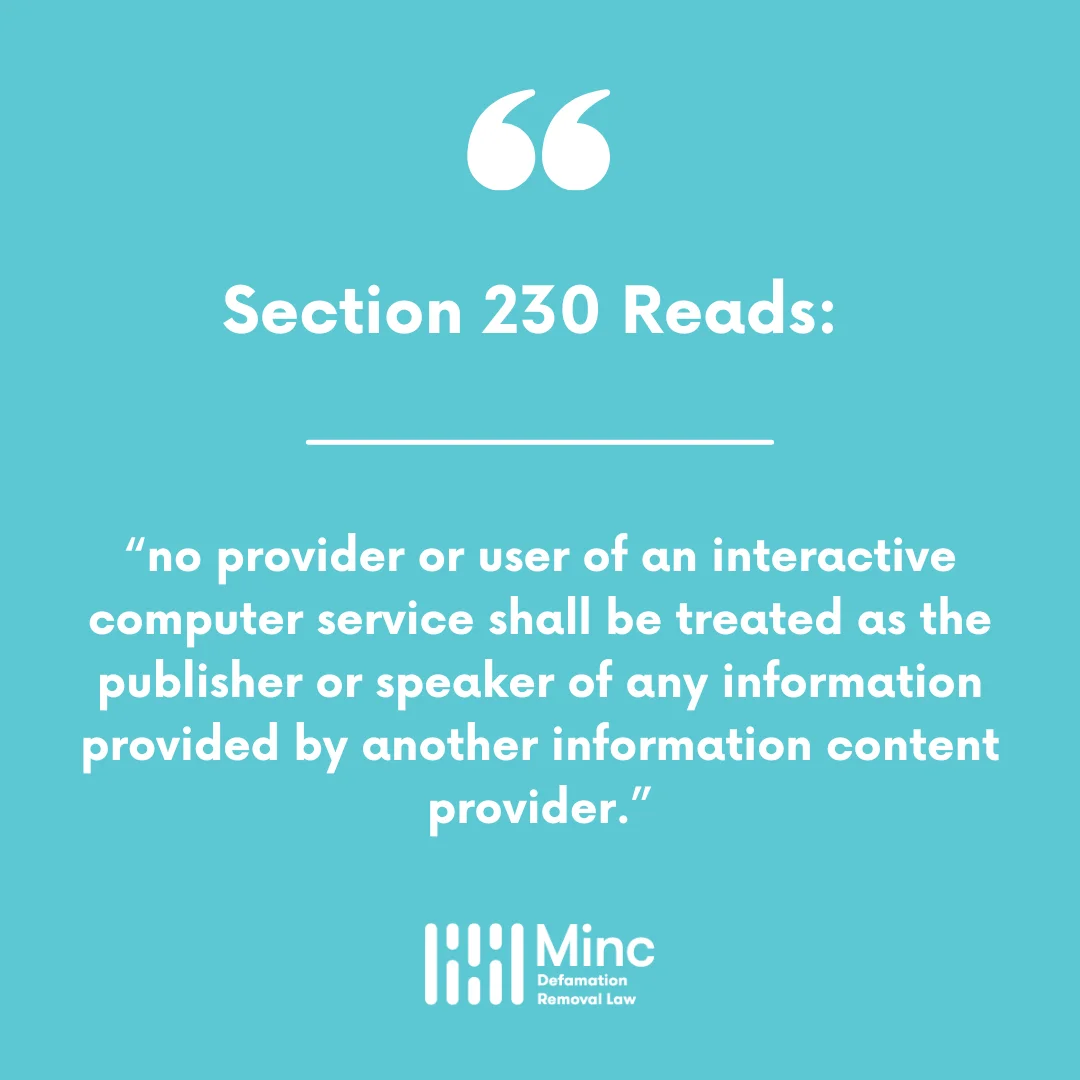
This protection means that in most defamation cases, legal action must be directed against the individual author or commenter who published the defamatory material, not against Substack itself.
Common Examples of Defamation on Substack
Defamation on Substack, similar to other online platforms, often involves false statements intended to harm an individual’s or entity’s reputation. Typical instances include:
- False Criminal Accusations
- Professional Misconduct Claims
- Business Falsehoods
- Claims of Dishonesty or Unethical Behavior
- Identity Impersonation
- Manipulated or Fabricated Evidence
Documenting Defamation on Substack Before It Disappears
Proper documentation is critical when addressing defamation on Substack. Content can be deleted by the author or removed by the platform. Without adequate evidence preservation, proving the defamation occurred may become difficult.
Comprehensive Substack Defamation Documentation Practices
Screenshots provide a fundamental form of evidence, but they must be captured correctly to be effective. Ensure the capture includes:
- The entire defamatory post or comment with all text visible.
- The full URL in the browser address bar.
- The date and time of capture.
- The name and profile picture of the author or commenter.
- Any visible engagement metrics, such as likes, shares, or comments.
Additional Evidence and Witness Statements
Consider obtaining formal statements from individuals who viewed the defamatory content, those who can attest to its falsity, or witnesses to any real-world consequences (e.g., lost employment, reduced income). These statements should be detailed, dated, and, if feasible, notarized.
An attorney can provide guidance to ensure all evidence is collected and preserved appropriately for maximum effectiveness in a legal context.
Immediate Steps to Take If You Are Defamed on Substack
Discovering defamatory content about you or your work on Substack requires prompt, strategic action. Following these steps in the correct sequence optimizes the likelihood of an effective resolution.
Document Everything First
Evidence may disappear rapidly. Comprehensive documentation should be your absolute first priority.
Avoid Public Responses
Resist the inclination to respond publicly to the defamation, however tempting. Public engagement can increase the visibility of false claims and generate additional content that may become more difficult to remove later. If a public address is deemed necessary, consult with an attorney beforehand to ensure the response does not jeopardize potential legal remedies.
Do Not Contact the Publisher Directly (Initially)
Direct communication with the defamer often proves counterproductive. It may alert them to potential legal action, prompting them to delete evidence before proper documentation can occur. Such contact might also provide them with information that could be used against the subject or escalate emotional tensions, potentially triggering further defamatory posts. Any communication with the defamer should typically proceed through legal channels after consulting with an attorney.
Report to Substack (With Strategic Caution)
Consider reporting the content to Substack, but understand the potential implications. Substack, like other platforms, has specific content guidelines that prohibit various forms of harmful content.
When reporting defamatory content, familiarize yourself with Substack’s official guidelines. Frame your complaint in terms of specific violations, rather than solely using the general term “defamation.” For instance, consider if the content violates policies concerning:
- Private Information: If the defamatory post discloses personal details such as a home address or phone number without proper authorization.
- Impersonation: If an individual is falsely posing as you, your brand, or your organization to publish false statements.
- Plagiarism: If the content falsely claims ownership of material written or created by someone else, especially when used in a defamatory context.
- Hate or Harmful/Illegal Activities: If the defamatory content includes credible threats of physical harm, incites violence based on protected classes, or advocates for self-harm, harm to others, or illegal acts.
Citing the exact guideline the reported content violates can increase the effectiveness of your report to Substack.
Be aware that if the content is defamatory but does not explicitly violate a listed policy (e.g., it is a false statement of fact but does not involve private information or incitement to violence), Substack may be less inclined to remove it without a court order.
Consult with an Experienced Internet Defamation Attorney
An experienced internet defamation attorney can evaluate the legal strength of your case, advise on jurisdictional issues, develop a strategic response plan, and assist in preserving evidence correctly. They can guide platform reporting for optimal results, draft effective cease and desist communications, and prepare for potential litigation if necessary. Many victims of defamation find that a single, well-crafted legal letter can resolve the situation without recourse to costly court proceedings.
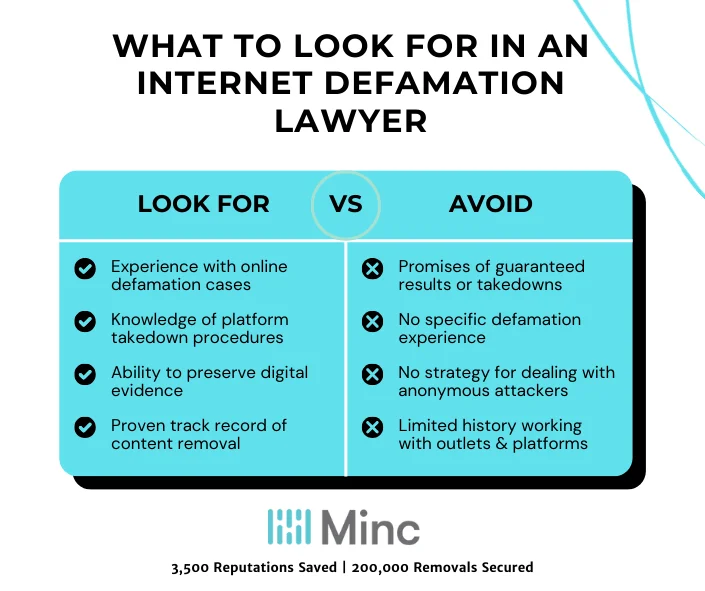
When selecting legal representation, it is important to choose an attorney with a proven track record in online defamation cases, including knowledge of platform content removal procedures and the ability to handle digital evidence. Be wary of those who offer guaranteed outcomes or lack specific experience with anonymous online attackers and content removal from various platforms.
Legal Options for Defamation on Substack
When reporting to Substack proves insufficient, several legal remedies exist.
Cease and Desist & Demand Letters
A carefully constructed cease and desist letter or demand letter from an attorney can be an effective tool when the defamer’s identity is known and a rapid resolution is desired without formal court proceedings.
Effective cease and desist and demand letters typically include specific identification of the defamatory statements, a clear explanation of why the statements are false, documentation of the harm caused, specific demands for content removal or a retraction, a deadline for compliance, and an outline of consequences for non-compliance if the demands are not met.
Subpoenas to Identify Anonymous Defamers on Substack
If the defamer on Substack is anonymous, you may need to file a “John Doe” lawsuit against the unknown defamer. This process involves obtaining a court order to compel Substack to reveal identifying information about the anonymous publisher, such as their IP address or email address. Once the defamer is identified, the lawsuit can be amended. This process requires specific legal expertise, as platforms often resist these subpoenas, and courts apply varying standards for unmasking anonymous speakers.
Defamation Lawsuits
A formal defamation lawsuit may be necessary when the defamer refuses to remove content, significant damages have occurred, a court order is needed for content removal, or financial compensation for harm is sought.
The typical timeline for defamation lawsuits ranges from several months to over a year, depending on complexity and jurisdiction. Potential outcomes include court-ordered content removal, monetary damages, public retraction, or an injunction against future defamation.
Content Removal and De-indexing Strategies
Even without the defamer’s cooperation, options exist for directing platforms to remove content. Additionally, de-indexing requests can require search engines to remove links to the defamatory content from their search results, effectively reducing its visibility. Strategic content suppression through reputation management can also be explored.
Taking Control When Facing Defamation on Substack
Defamation on Substack can feel overwhelming, but individuals do not need to confront it in isolation. By understanding the legal qualifications of defamation, meticulously documenting evidence, and knowing reporting and legal options, effective action can be taken to protect one’s reputation and creative work.
At Minc Law, we have assisted hundreds clients in successfully addressing online defamation through platform reporting, content removal, de-indexing, and, when necessary, legal action against defamers. The key to success lies in acting promptly and strategically with appropriate guidance.
If you are dealing with defamation on Substack, contact our experienced defamation attorneys for a confidential consultation to discuss your specific situation and develop an effective response plan. You may reach out by calling us at 216-373-7706 or by filling out the form below.
Get Your Free Case Review
Fill out the form below, and our team will review your information to discuss the best options for your situation.
This page has been peer-reviewed, fact-checked, and edited by qualified attorneys to ensure substantive accuracy and coverage.
