(216) 373-7706
- Originally Published on January 26, 2026
What to Do If a Disgruntled Former Employee is Leaving Defamatory Reviews

When a disgruntled former employee leaves bad reviews about your business, it can seriously damage your company’s reputation and bottom line. These negative comments, often stemming from personal grievances rather than legitimate workplace issues, can unfairly tarnish your business in the eyes of current and prospective customers, clients, and employees.
If you are facing defamatory reviews from a former employee, it is important to take decisive action to protect your company. Here are the key steps you should take:
- Assess if the review is defamatory or a legitimate complaint,
- Preserve evidence of the reviews,
- Flag and report the reviews to the platform,
- Consider a private response to the former employee,
- Consult with an attorney about legal options.
At Minc Law, we have extensive experience helping businesses combat false and damaging allegations from former employees. We excel at uncovering anonymous reviewers, removing defamatory content from the internet, and resolving disputes promptly and discreetly.
In this article, we will examine the impact of former employees defaming your business and offer practical strategies for prevention and resolution.
Why Former Employees Defame Their Employers
Understanding why former employees resort to defamation is key to preventing and responding to these attacks effectively. Common motivations include:
- Retaliation: Employees who feel wronged or believe they were unfairly terminated may defame their employer as revenge.
- Emotional Reactions: Anger, resentment, or feelings of betrayal following termination can drive employees to lash out online.
- Reputation Management: Employees terminated for cause may attempt to control the narrative by attacking their former employer before word of their termination spreads.
- Competitive Advantage: Former employees who join competitors may defame their previous employer to divert clients or highlight perceived weaknesses.
- Attention-Seeking: Some individuals post inflammatory content simply to garner attention or support from others online.
How Former Employees Defame Employers
Former employees have multiple platforms for spreading defamatory content:
- Employee Review Sites: Glassdoor, Indeed, and similar platforms allow former employees to post anonymous reviews that prospective employees and clients regularly consult.
- Social Media: Facebook, Twitter, LinkedIn, and Instagram provide easy platforms for publicly airing grievances.
- Consumer Review Sites: Some former employees post fake reviews on Yelp, Google, or industry-specific sites posing as customers.
- Industry Forums: Professional communities and forums specific to your industry can become venues for spreading damaging information.
- Media Outreach: In extreme cases, former employees may contact journalists or bloggers to publicize their claims.
The Business Impact of Defamatory Employee Reviews
Defamatory reviews from former employees can damage your business in multiple ways:
Hiring Challenges: A substantial majority of job seekers rely on employee review sites before applying for positions. Half of candidates state they would not work for a company with a poor reputation, even if offered higher pay. In a competitive job market, defamatory employee reviews can severely impact your ability to attract and retain talent.
Lost Business: Prospective clients and customers often research companies before engaging their services. Defamatory content suggesting unethical practices, poor management, or workplace problems can drive potential business away.
Damaged Professional Relationships: For industries like law and medicine where reputation is paramount, defamatory claims from former employees can harm referral relationships and professional standing.
Preventing Defamatory Reviews From Former Employees
While you cannot eliminate all risk, proactive measures can reduce the likelihood of former employees resorting to defamation.
Maintain Professional Termination Procedures
How you handle terminations significantly impacts whether former employees leave with lingering resentment. Regardless of the circumstances, maintain professionalism and dignity throughout the process. A respectful exit experience reduces the likelihood of retaliation.
Conduct Exit Interviews
Exit interviews provide departing employees an opportunity to voice concerns before they leave. Having an HR professional or external consultant conduct these interviews creates a neutral space for honest feedback. Employees who feel heard during the exit process are less likely to seek other outlets for their frustrations.
Utilize Confidentiality and Non-Disparagement Agreements
Employment contracts and separation agreements can include provisions restricting what former employees can publicly disclose about your business. Common protections include:
- Non-disclosure clauses preventing sharing of confidential business information,
- Non-disparagement clauses prohibiting false or damaging public statements,
- Confidentiality provisions protecting client information and business practices.
These agreements must be carefully drafted to be enforceable. Consult with an employment attorney to ensure your agreements comply with applicable laws.
Address Issues During Employment
Foster a workplace culture where employees can voice concerns before they become grievances. Regular feedback mechanisms, anonymous reporting options, and accessible management help identify and resolve issues before they lead to terminations and subsequent retaliation.
Immediate Steps After Discovering Defamatory Reviews
If you discover a former employee is posting defamatory content, take these immediate actions:
Determine if the Claims Are Defamatory
Not every negative review constitutes defamation. Distinguish between:
Protected Speech:
- Opinions about workplace culture or management style
- Truthful statements about working conditions
- General criticism without specific false factual claims
Potentially Defamatory Statements:
- False accusations of illegal conduct
- Fabricated claims about unethical business practices
- Lies about the reasons for termination
- False statements about financial instability or fraud
If a review raises legitimate workplace concerns, consider addressing those issues internally rather than pursuing removal. However, if the review contains demonstrably false factual claims intended to harm your reputation, you may have grounds for action.
Preserve All Evidence
Document everything immediately. Defamatory content can be deleted at any time, eliminating your evidence.
- Screenshot the entire review, including date, time, username, and platform
- Capture the URL of the content
- Save the reviewer’s profile information
- Use preservation software like PageVault or VisualPing for authenticated copies
- Document any measurable business impact such as lost clients, cancelled contracts, or recruiting difficulties
Report Violations to the Platform
Most review platforms prohibit certain types of content in their terms of service. Report reviews that:
- Contain demonstrably false factual statements
- Were posted by someone who was never actually an employee
- Include threats, harassment, or hate speech
- Violate confidentiality or disclose proprietary information
- Are posted by fake or duplicate accounts
When reporting, be specific about which terms of service the review violates and provide evidence supporting your claim.
Consider a Private Response
Before taking public or legal action, consider whether a private conversation might resolve the situation. Some former employees simply want to be heard. A professional, non-confrontational outreach acknowledging their experience can sometimes defuse the situation.
However, be cautious. Any communication you have could later be used against you or published online. Keep communications professional, avoid admitting wrongdoing, and consider having legal counsel review your response before sending it.
Evaluate Whether to Respond Publicly
Public responses should generally be a last resort. Responding can draw more attention to the defamatory content and potentially trigger the Streisand Effect.
If you decide a public response is necessary:
- Keep it brief and professional
- Do not disclose confidential information about the employee
- Stick to facts without being defensive or emotional
- Avoid getting drawn into a public argument
For businesses in certain regulated industries like healthcare or legal services, additional confidentiality obligations may restrict what you can say publicly. Consult with an attorney before responding.
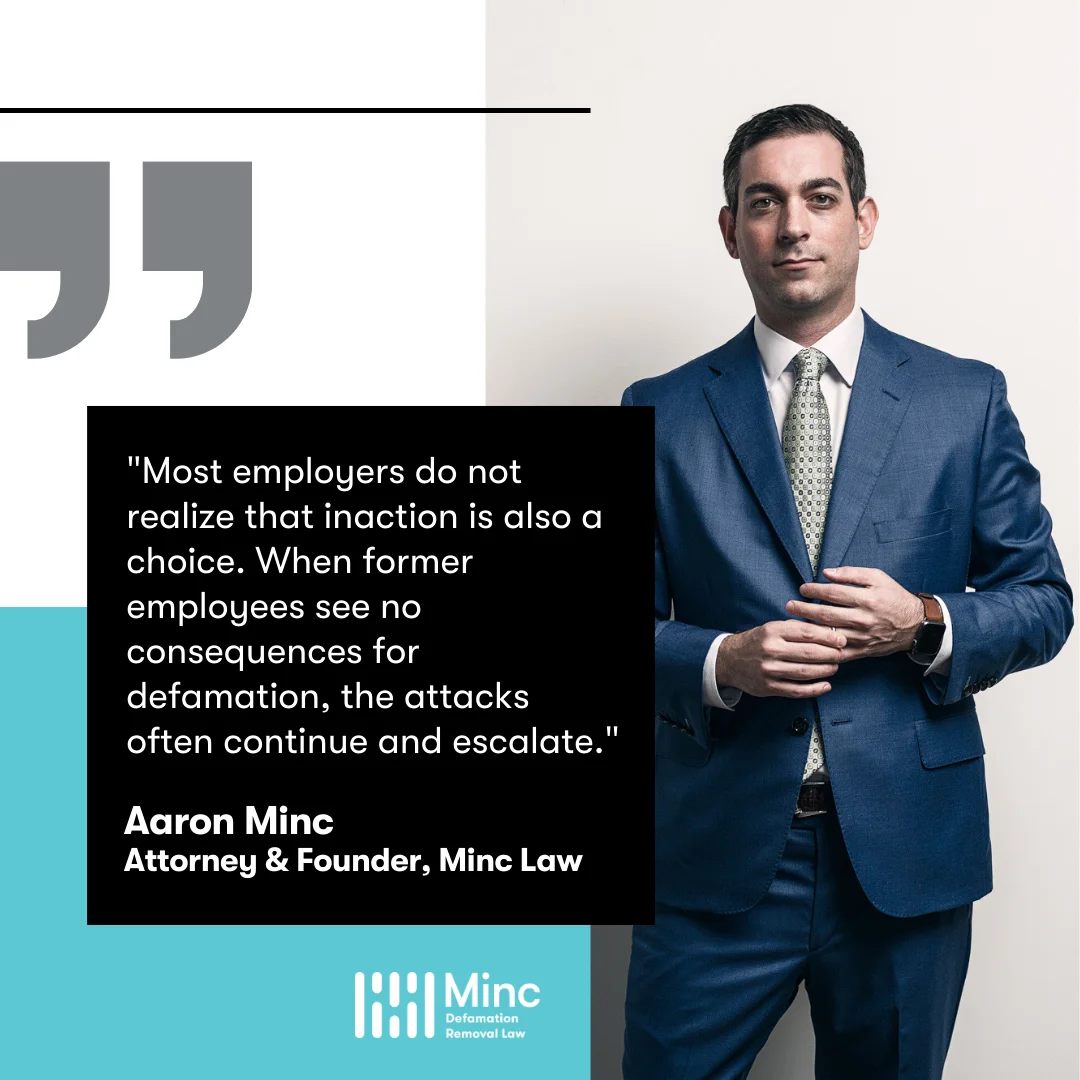
Legal Options for Defamatory Employee Reviews
When platform reporting and private resolution efforts fail, legal action may be necessary.
Cease and Desist Letters
A cease and desist letter formally demands that the former employee stop making defamatory statements and remove existing content. The letter should:
- Identify the specific false statements
- Explain why the statements are defamatory
- Demand removal of the content
- Reference any applicable contractual obligations like non-disparagement clauses
- Warn of potential legal consequences if the behavior continues
In some jurisdictions, sending a cease and desist letter is a prerequisite to filing a defamation lawsuit.
Defamation Lawsuits
If the former employee’s statements constitute defamation, you may have grounds for a lawsuit. To succeed, you typically must prove:
- The former employee made false statements of fact about your business,
- The statements were published to third parties,
- The statements were made with at least negligence, and
- The statements caused measurable harm to your business.
For certain particularly harmful false statements (such as accusations of criminal conduct or fraud), you may have a claim for defamation per se, which does not require proof of specific damages.
Other Legal Claims
Beyond defamation, you may have additional legal remedies:
- Breach of Contract: If the employee violated a non-disparagement or confidentiality agreement
- Tortious Interference: If the false statements interfered with business relationships or contracts
- Injurious Falsehood: For false statements that harm your business reputation and cause economic loss
Online Reputation Management
In some cases, pursuing online reputation management strategies may be more effective than litigation. ORM services can help suppress negative content by promoting positive content about your business, making defamatory reviews less visible in search results.
Work With Experienced Defamation Attorneys
Dealing with defamatory reviews from former employees requires a strategic approach that balances protecting your reputation with avoiding actions that could make the situation worse.
At Minc Law, we help businesses navigate these complex situations. We can:
- Assess whether content is legally defamatory or protected speech
- Identify anonymous reviewers through legal discovery
- Send effective cease and desist letters
- Report violations to platforms and work with their legal teams
- Pursue defamation lawsuits when appropriate
- Implement reputation management strategies
Our attorneys understand how to remove defamatory content efficiently and discreetly, without drawing additional attention to the matter.
To explore your legal options, reach out to schedule your initial consultation by calling us at (216) 373-7706 or filling out our online contact form below.
Get Your Free Case Review
Fill out the form below, and our team will review your information to discuss the best options for your situation.
This page has been peer-reviewed, fact-checked, and edited by qualified attorneys to ensure substantive accuracy and coverage.