(216) 373-7706
- Originally Published on January 7, 2026
How to Report and Remove Defamation on YouTube

Are you the target of defamation on YouTube? Discovering a video spreading lies about you can feel devastating, especially when it threatens your reputation or business. Your first instinct is probably to get it removed immediately. But can you actually remove defamatory YouTube videos?
The answer is yes, it is possible to remove YouTube videos containing defamation, but the path to removal depends on what else is in the video. YouTube rarely removes content based solely on defamation claims. However, defamatory videos often violate other Community Guidelines like harassment, privacy, or copyright policies, which YouTube will enforce. In cases where the video only contains defamation, you may need to pursue legal action to obtain a court order.
In this guide, we will explain which videos qualify for removal, how to report violations to YouTube, and what to do when the standard reporting process does not work.
How to Remove a Defamatory YouTube Video: A Quick Overview
To remove a defamatory YouTube video:
- Stay calm and do not respond to or engage with the defamer.
- Preserve evidence by downloading or recording the video and taking screenshots.
- Determine if the video violates YouTube’s Community Guidelines beyond just being defamatory.
- Sign in to your YouTube account and navigate to the video.
- Click the three dots (“…”) below the video.
- Select “Report” and choose the most appropriate violation from the menu.
- Provide specific details like timestamps and descriptions of the violations.
- If YouTube removes the video, it typically happens within a few days.
- If YouTube does not remove the video after reporting, consider legal action or online reputation management.
Can You Delete YouTube Videos Containing Defamation?
No, you cannot directly delete YouTube videos yourself. YouTube does not provide targets of defamation with a delete button or direct removal option. You must report the content using YouTube’s flagging system and demonstrate that it violates their Community Guidelines.
For U.S. residents, YouTube’s position is particularly strict. YouTube will not remove videos simply because they contain defamatory statements. YouTube cites Section 230 of the Communications Decency Act, which protects platforms from liability for user-generated content. According to their official policy, YouTube is “not in a position to adjudicate the truthfulness of postings” and does not remove videos due to allegations of defamation alone.
This means YouTube will only remove defamatory videos if they also violate other policies or if you obtain a court order.
What Types of YouTube Videos Can Be Removed?
Understanding YouTube’s Community Guidelines helps you determine whether you have valid grounds to request video removal. Not all defamatory videos are eligible for removal through the standard reporting process. YouTube will only consider removing videos that clearly violate their policies.
Before taking action, carefully evaluate the video. Videos may be eligible for removal if they contain:
- Harassment and cyberbullying: Videos that target you with prolonged or malicious insults, threats, doxxing (revealing your personal address, phone number, or email), unwanted sexualization, or malicious insults based on protected attributes like race, gender, or sexual orientation. YouTube takes a stricter approach when the target is a minor.
- Privacy violations: Videos showing you in private or sensitive circumstances without your consent, revealing personal identifying information, or sharing intimate images without permission. This includes footage taken in locations where you have a reasonable expectation of privacy.
- Copyright infringement: Videos using your photos, video footage, music, or other creative content without permission. You automatically own the copyright to photos and videos you create, even without formal registration.
- Impersonation: Channels or videos pretending to be you, using your name and likeness to mislead viewers, or creating fake profiles in your name.
- Hate speech: Content that promotes violence or hatred against you based on protected attributes including age, caste, disability, ethnicity, gender identity, nationality, race, immigration status, religion, sex, sexual orientation, veteran status, or victim status of a major violent event.
- Child endangerment: Any content exploiting, endangering, or sexualizing minors.
- Violent or graphic content: Excessively violent, graphic, or disturbing material posted to shock or disgust viewers.
- Harmful or dangerous content: Videos promoting dangerous activities or encouraging viewers to commit harmful acts.
- Spam and deceptive practices: Misleading metadata, scams, or repetitive content designed to manipulate visibility.
All content on YouTube is subject to their Terms of Service and Community Guidelines.
How to Report a YouTube Video for Removal
If you believe a video violates YouTube’s Community Guidelines:
- Sign in to your YouTube account.
- Navigate to the video you want to report.
- Click the three dots (“…”) below the video.
- Select “Report.”
- Choose the most accurate reason from the menu (such as “Harassment or cyberbullying” or “Infringes my rights”).
- Provide specific details. Include timestamps showing where violations occur and clear descriptions of how the content violates policies.
- Click “Submit.”
You can also report channels, comments, and other content using similar steps. For channels, navigate to the channel page, click “About,” and select the flag icon to report.
What Happens Next
YouTube’s moderation team reviews flagged content. If the video violates Community Guidelines, YouTube typically removes it within a few days. However, YouTube does not provide updates about the outcome of your report. You will need to check back to see if the video has been removed.
Content flagged for copyright infringement follows a different process through YouTube’s Copyright Takedown system and typically results in faster action if your claim is valid.
Tips for Successful Reporting
Providing clear evidence and thorough documentation can improve your chances of removal. When reporting a video:
- Be specific about which Community Guideline the video violates.
- Provide exact timestamps showing where violations occur in the video.
- Include context that helps moderators understand why the content is harmful.
- Use the most accurate reporting category available.
- If reporting privacy violations, explain why you have a reasonable expectation of privacy.
- For copyright claims, be prepared to provide proof of ownership.
- Maintain a professional, factual tone in your report.
What If YouTube Does Not Remove the Video?
If reporting the video does not result in its removal, you have several options.
Try Different Reporting Categories
If your first report was unsuccessful, review the video again to see if it violates other Community Guidelines you may have missed. A video might violate multiple policies, and choosing a different category could lead to removal.
Submit a Legal Complaint for Defamation (If Located Outside the U.S.)
For non-U.S. residents, YouTube may accept direct defamation complaints. Visit YouTube’s legal support pages and select your country to see if a defamation complaint form is available.
For U.S. residents, YouTube makes it clear that you must pursue legal action directly against the content creator. YouTube recommends obtaining a court order, which they will honor.
When Videos Cross Into Defamation: Legal Options For Removal
While YouTube will not remove videos simply because they are defamatory, there is one path to guaranteed removal: obtaining a court order. If a video contains demonstrably false statements of fact that damage your reputation, you may have grounds for legal action.
What constitutes defamation? Defamatory videos go beyond expressing negative opinions. They make provably false assertions of fact that harm your reputation or business, such as:
- Falsely accusing you of criminal activity when records prove otherwise
- Making demonstrably untrue statements about your business practices when documentation shows otherwise
- Fabricating events that witnesses, records, or other evidence can disprove
- Claiming you did or said things that never actually occurred
YouTube videos are unique because they can constitute both libel and slander. The spoken statements in the video are slander, while the recorded and published nature of the video makes it libel as well.
To pursue defamation claims, the video must meet these criteria:
- False statement of fact: The statement must be false and presented as fact, not opinion.
- Publication to third parties: It must be communicated to others (which YouTube videos are).
- Harm to reputation: It must cause demonstrable harm to your reputation, relationships, or business.
- Fault: The person making the statement must have acted with negligence or actual malice (depending on whether you are a private individual or public figure).
Truth is a complete defense to defamation. You cannot sue someone for making a statement about you if that statement is true, even if it harms your reputation.
Legal Methods to Remove Defamatory YouTube Videos
If you believe a video is defamatory, consult with an experienced internet defamation attorney. Legal options include:
- Send a cease and desist letter: Your attorney can draft a formal cease and desist letter demanding that the creator remove the defamatory content and stop making further false statements. This is often the fastest and most cost-effective solution. A well-crafted letter from an attorney demonstrates you are serious about legal action, outlines the laws that have been violated, and explains the financial consequences the defamer faces if they do not comply. Many defamers remove content within days of receiving a cease and desist letter because they realize you have legal representation and are prepared to file a lawsuit. At a fraction of the cost of litigation, cease and desist letters frequently accomplish the same result.
- Pursue a defamation lawsuit: If the creator refuses to remove the content, you may file a defamation lawsuit to hold them accountable and restore your reputation. If the creator is anonymous, your attorney can file a John Doe lawsuit and obtain a court order compelling YouTube to reveal their identity. A successful lawsuit can result in court-ordered removal of the video, financial compensation for damages to your reputation and business, punitive damages to punish malicious behavior, injunctive relief preventing future defamation, court-ordered retractions and corrections, and recovery of attorney’s fees and costs.
Once you obtain a court order, submit it to YouTube:
By mail:
YouTube, Inc.
Attn. Legal Support
901 Cherry Ave.
San Bruno, CA 94066
USA
By email: legal@support.youtube.com
By fax: +1 650 872 8513
YouTube will comply with valid court orders requiring content removal.
Potential Benefits of Legal Action
While pursuing legal action requires careful consideration, it can be highly effective for removing defamatory content and holding bad actors accountable. Benefits include:
- Guaranteed removal: A court order ensures the video is removed and prevents the defamer from reposting similar content.
- Financial compensation: You can recover damages for lost income, business opportunities, and harm to your reputation.
- Deterrence: Legal consequences discourage the defamer and others from continuing or repeating the behavior.
- Public vindication: A successful lawsuit publicly establishes that the statements were false and defamatory.
- Peace of mind: Taking decisive legal action gives you control over the situation and provides closure.
- Protection from future attacks: Injunctive relief prevents the defamer from making additional false statements about you.
Potential Risks of Legal Action
Before pursuing legal action, be aware of these risks:
- Streisand Effect: Efforts to suppress content can sometimes increase its visibility and draw more attention to it.
- Cost and time: Defamation lawsuits can be expensive and lengthy, often taking months or years to resolve.
- Uncertain outcomes: There is no guarantee of a favorable result, and defamation cases can be difficult to win.
- Counterclaims: The defendant may file counterclaims against you.
An experienced defamation attorney can help you evaluate whether the potential benefits outweigh the risks in your specific situation.
Can You Sue YouTube for Defamation?
In almost all cases, no. Section 230 of the Communications Decency Act protects YouTube from being sued for user-generated content. The law treats YouTube as a platform, not a publisher, which means they are not responsible for what users post.
The only extremely rare exceptions are situations where:
- YouTube itself created or substantially modified the defamatory content
- YouTube promised to remove specific content and failed to do so
- YouTube’s actions went beyond passive hosting to active participation in creating the defamatory message
These exceptions are very narrow and rarely apply. Your legal remedy is against the person who created and posted the video, not against YouTube.
Protecting Yourself Right Now
If you are dealing with defamatory content on YouTube, take these immediate steps to protect yourself:
Preserve Evidence
Before the video is removed or changed, collect evidence:
- Download or record the video
- Screenshot the video title, description, and any defamatory comments
- Save information about the channel (name, profile, other videos)
- Note the upload date, view count, and URL
- Use tools like Visualping or Page Vault for more advanced preservation
Do Not Respond or Engage
Responding to defamatory content often makes things worse. It can:
- Drive more attention to the video
- Trigger the Streisand Effect, where attempts to hide content increase its visibility
- Escalate the situation and invite further attacks
- Provide the creator with more material to use against you
Adjust Your Privacy Settings
Lock down your social media accounts and online presence to prevent the creator from gathering more information about you. Review privacy settings on all platforms and limit what information is publicly visible.
Contact an Internet Defamation Attorney
If the defamatory video is causing serious harm to your reputation, relationships, or business, consult with an experienced internet defamation attorney as soon as possible. An attorney can:
- Evaluate whether the content meets the legal definition of defamation
- Assess your options for removal through YouTube’s policies or legal action
- Advise you on the best strategy based on your specific situation
- Send cease and desist letters or pursue lawsuits if necessary
- Help you understand the costs, timeline, and likelihood of success
- Prevent you from taking steps that could harm your case
Many defamation attorneys offer consultations, so you can understand your options before committing to legal action.
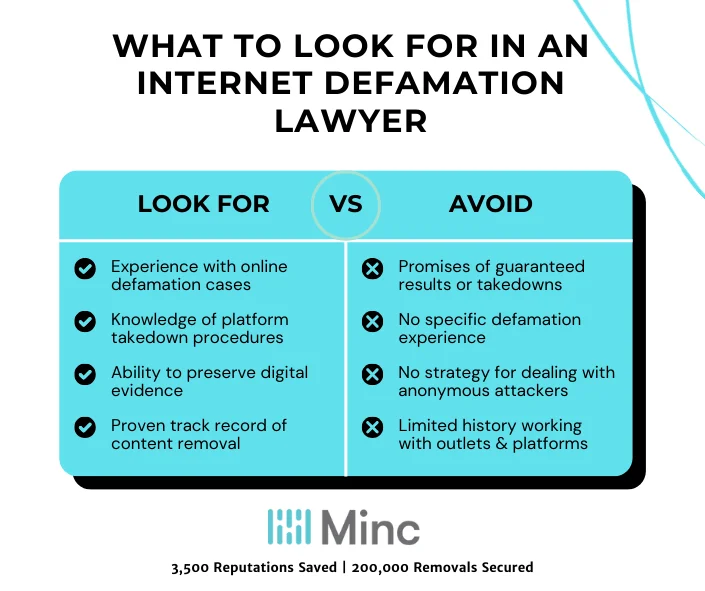
Minc Law Can Help You Remove Defamatory YouTube Videos
At Minc Law, we understand the damage that defamatory YouTube videos can cause to your personal reputation and professional life. Our team of experienced internet defamation attorneys is here to help you fight back and reclaim control of your online presence.
Contact Minc Law today for a free case evaluation. We will listen to your concerns, assess your situation, and develop a customized action plan to help you remove defamatory content and restore your reputation.
For more information or to schedule a consultation, call us at (216) 373-7706 or complete our online contact form below.
Get Your Free Case Review
Fill out the form below, and our team will review your information to discuss the best options for your situation.
This page has been peer-reviewed, fact-checked, and edited by qualified attorneys to ensure substantive accuracy and coverage.