(216) 373-7706
- Originally Published on December 23, 2025
Lessons for 2026: What This Year Taught Us About Digital Reputation and Control

Every year, we look back at the trends, cases, and developments that shaped the reputation landscape. Not just to document what happened, but to help our clients understand what’s coming and how to prepare for it.
2025 was a year of significant shifts. New threats emerged. Courts set important precedents. Legislation caught up to problems that had been festering for years. And the ways people research, vet, and judge each other continued to evolve in ways that create both risk and opportunity.
Here’s what we learned and what it means for 2026.
1. AI Is Generating False Information About Real People
One of the most unexpected reputation threats of 2025 didn’t come from bad actors. It came from AI itself.
Large language models routinely “hallucinate,” confidently stating fabricated facts about real people. They invent criminal histories, professional misconduct, false credentials, and events that never happened. These aren’t rare glitches. They’re a systemic feature of how these systems work.
The lawsuits started piling up this year. Conservative activist Robby Starbuck filed separate suits against Google and Meta after their AI chatbots falsely accused him of sexual assault and involvement in the January 6 Capitol riot. Meta settled in August. A Minnesota solar company sued Google after its AI Overview feature falsely claimed the state attorney general was suing the firm, costing them business. A UK doctor found Google’s AI telling users he had been suspended for selling fake sick notes. A Georgia radio host sued OpenAI after ChatGPT falsely linked him to an embezzlement case.
The legal landscape remains unsettled. AI companies argue these are unavoidable “hallucinations” and point to disclaimers. Courts are still determining whether Section 230, which protects platforms from liability for user content, applies to content the AI generates itself.
For now, the burden falls on the person being described to discover the falsehood, document it, and figure out how to correct the record.
2. AI Is Empowering Cybercriminals, Hackers, and Blackmailers
While AI systems create reputational harm passively, criminals are actively weaponizing AI to attack more effectively than ever.
Blackmailers use generative AI to create realistic compromising images from innocent photos scraped from social media. Voice cloning allows scammers to impersonate family members in distress. Large language models generate convincing extortion messages at scale, free of the grammatical errors that used to serve as red flags. AI workflows scrape public data to build detailed dossiers on targets, enabling highly personalized psychological manipulation.
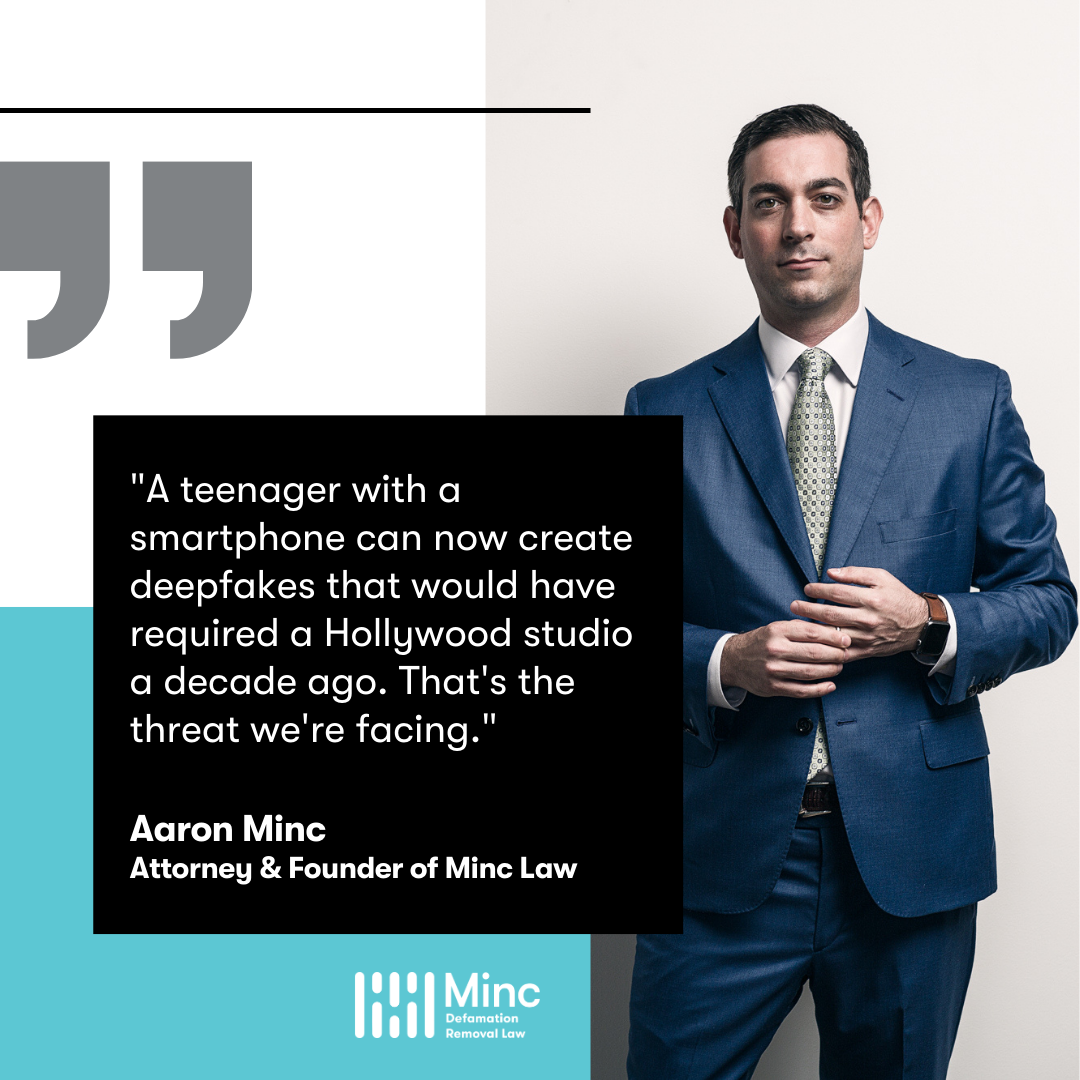
On the hacking side, AI-powered cyberattacks surged 72% year-over-year. In September, Anthropic disclosed what it called “the first reported AI-orchestrated cyber espionage campaign,” where AI automated 80-90% of the attack, making thousands of requests per second, faster than any human team could operate. Private information that was once secure can now be exposed faster than ever. And once sensitive data is out, it becomes leverage for extortion and reputational destruction.
3. The TAKE IT DOWN Act Created Real Accountability for Image-Based Abuse
For years, victims of nonconsensual intimate imagery faced an uphill battle. Platforms dragged their feet on removal requests. Perpetrators hid behind anonymity. Legal tools varied wildly from state to state.
The TAKE IT DOWN Act, changed that. The TAKE IT DOWN Act, enacted May 19, 2025, makes it a federal crime to publish nonconsensual intimate images (NCII) or AI deepfakes, requiring platforms to remove reported content within 48 hours, with enforcement by the FTC and potential penalties, addressing both real and digitally forged exploitative material.
For anyone dealing with intimate image abuse, whether real images or AI-generated fakes, there’s finally a clear federal path to getting content removed quickly.
4. Fake Reviews Reached Critical Mass
Roughly 30% of online reviews are now inauthentic. And for businesses that depend on their online reputation, this has become an existential problem.
AI has made generating convincing fake reviews trivially easy. Review brokers operate marketplaces where fakes can be purchased at scale. For businesses that depend on their reputation, this means competitors and bad actors can flood your listings with fabricated one-star reviews. Healthcare providers, law firms, and service businesses face coordinated “review bombing” campaigns, sometimes paired with extortion schemes offering to “fix” the problem for thousands of dollars.
The FTC responded with a rule banning fake reviews, with fines up to $53,088 per violation. But enforcement can difficult because there’s no one clear test to distinguish AI-generated fakes from legitimate reviews where someone used AI to improve their grammar.
For businesses where credibility drives revenue, fake reviews mean measurable lost income that can take months or years to repair.
5. Your Online Reputation Is Being Vetted in More Ways Than Ever
It’s no longer just employers running background checks. In 2025, the vetting culture went mainstream and personal.
The Tea app exploded to over 4.6 million users within months, giving women AI-powered tools to research men they’re dating: reverse image searches, background check integrations pulling criminal histories, and crowdsourced reviews from other users. “Are We Dating the Same Guy?” Facebook groups, now numbering over 200 nationwide, serve a similar function.
Your online reputation now follows you into dating, relationships, and personal life, not just professional contexts. And unlike formal background checks, these platforms rely on anonymous, unverified, crowdsourced information. A single false accusation can circulate to thousands of people before you know it exists.
6. Authenticity Has Become Your Best Defense
In a world where anything can be faked, a documented track record of authenticity is your strongest protection when attacks come.
This isn’t about marketing. It’s about evidence. Real client testimonials, verified credentials, a history of transparent engagement, and consistent public presence over time. These aren’t just good business practices anymore. They’re the foundation you point to when someone tries to fabricate a narrative about you.
When false accusations appear, the first thing people do is search your name. What they find matters. A business with years of genuine reviews, real client relationships, and consistent public engagement has something to stand on. A business with a thin online presence or no track record is more vulnerable because there’s nothing to contradict the attack.
The same applies to individuals. Professionals who have built authentic credibility over time have a baseline that makes fabricated claims easier to dispute. Those who haven’t are starting from zero when a crisis hits.
Building this foundation takes time. It can’t be manufactured overnight when you’re already under attack. The businesses and individuals who weather reputation crises best are the ones who invested in authenticity before they needed it.
7. Defamation Litigation Remains a Powerful Tool to Clear Your Name
When someone destroys your reputation with lies, you can fight back on social media, issue denials, or hope the story fades. None of it clears your name the way a lawsuit can.
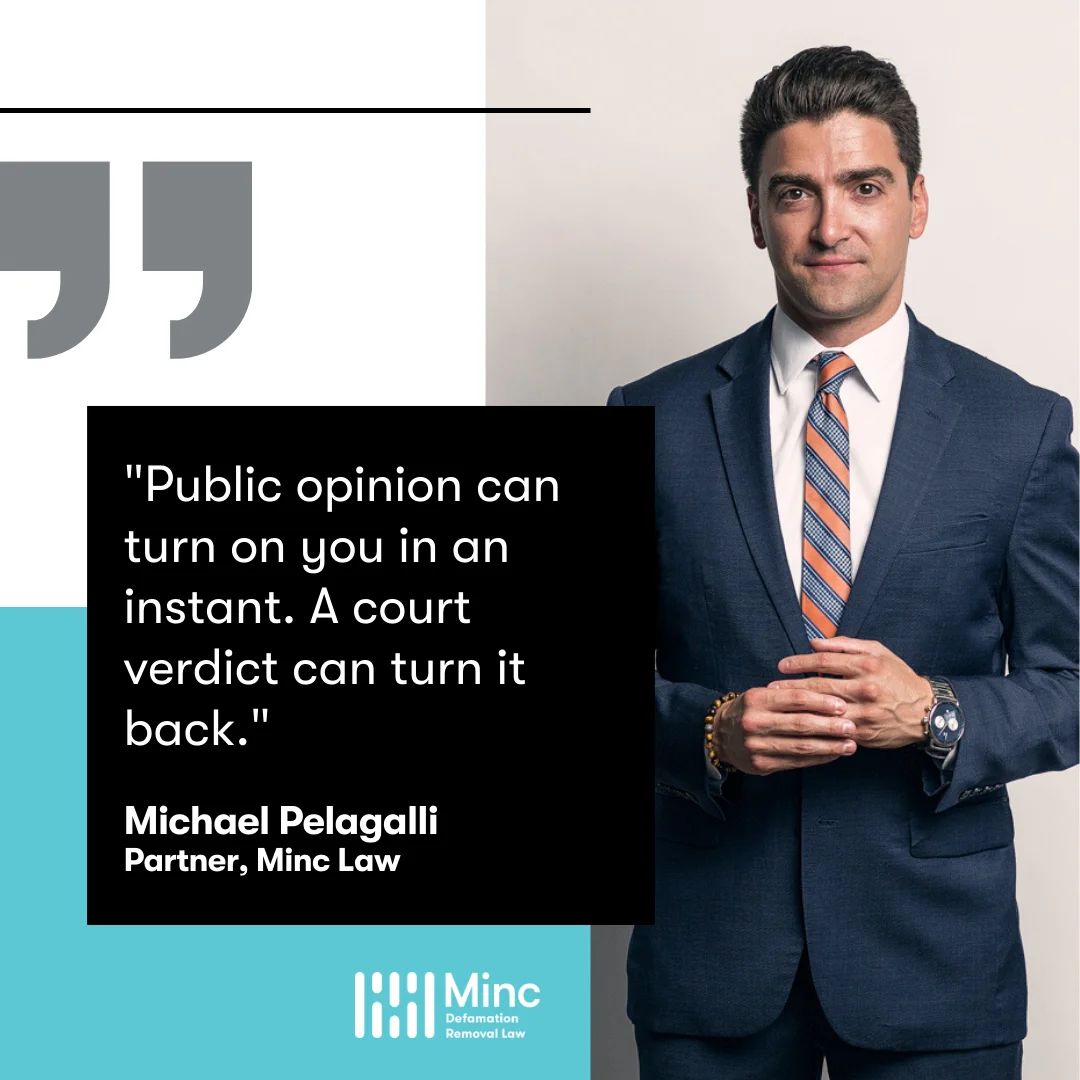
Litigation is definitive and binary. It doesn’t depend on who has more followers or who tells a more compelling story. It’s a formal, public determination that the statements made against you were false. That carries weight that no press release or public statement can match.
2025 saw defamation verdicts and settlements that underscored just how seriously courts are taking reputational harm:
$50 million awarded to Jack Nicklaus after a jury found his former business partners spread false claims about his mental fitness and business dealings.
$83.3 million upheld for E. Jean Carroll against Donald Trump after a federal appeals court affirmed that repeated defamatory statements warrant substantial damages.
Over $850 million recovered by Dominion Voting Systems through settlements with media outlets that broadcast false claims about the company, including $787.5 million from Fox News and $67 million from Newsmax, demonstrating that corporations can use defamation law to systematically dismantle false narratives.
These are high-profile cases, but the principle applies at every level. Doctors, executives, business owners, and private individuals use defamation litigation to clear their names and restore what was taken from them.
In an environment where truth is increasingly difficult to verify, a court victory is proof that matters.
Minc Law Can Help
The online reputation landscape is evolving rapidly. AI-generated content, synthetic media, fake reviews, and new platforms for anonymous accusations present challenges that did not exist even a few years ago. Navigating these issues requires not only legal knowledge but also a clear understanding of how online content spreads, how platforms operate, and what strategies are most effective.
Minc Law is the only law firm in the United States devoted exclusively to internet defamation and digital reputation issues. We have been at the forefront of this field for over a decade, representing individuals and businesses across a wide range of reputation matters. Our experience spans thousands of cases, giving us a clear understanding of what works, what to avoid, and how to move forward strategically.
If you are facing reputational harm or want to understand your options before a situation escalates, we are here to help. A consultation with an experienced attorney can offer clarity, outline your options, and provide the guidance needed to protect what you have built. To get started, you can call us at (216) 373-7706 or submit a request through our online contact form below.
Get Your Free Case Review
Fill out the form below, and our team will review your information to discuss the best options for your situation.
This page has been peer-reviewed, fact-checked, and edited by qualified attorneys to ensure substantive accuracy and coverage.