 (216) 373-7706
 Newark, New Jersey Defamation Lawyers
If your reputation is being attacked in Newark, you have more options than you might think. False reviews, anonymous online posts, and viral social media accusations can derail a career or a business overnight, but they can also be challenged, removed, and answered with the right legal strategy.

From Ironbound restaurateurs and Downtown Newark executives to RWJBarnabas and University Hospital physicians, Rutgers and NJIT faculty, Port Newark logistics professionals, and the financial services, insurance, and pharma professionals working across the New York metro, Newark runs on relationships and reputation. When a competitor plants fake Google reviews, an ex-employee posts on Glassdoor or Reddit, or an anonymous account spreads a false accusation on X or Facebook, the damage doesn’t stay online. It shows up in lost clients, withdrawn job offers, security clearance reviews, and strained personal relationships.
Minc Law has helped more than 3,500 clients across the country shut down defamation campaigns, remove harmful content from the internet, and rebuild their reputations. We bring that same focused approach to clients throughout Newark, Essex County, and the surrounding North Jersey communities, including Jersey City, Hoboken, Montclair, Bloomfield, West Orange, Livingston, Millburn, and the broader Bergen, Hudson, Morris, Union, and Passaic County region.
Read More
Can You Sue For Defamation of Character in Newark, New Jersey?
Yes. New Jersey recognizes defamation as a civil cause of action, and both individuals and businesses can sue when a false statement of fact causes reputational harm. New Jersey defamation law is largely common law, shaped by court decisions rather than a single comprehensive statute, with the statute of limitations being one of the few codified pieces. To bring a successful defamation claim under New Jersey law, a plaintiff must show:
- The defendant made a false and defamatory statement of fact about the plaintiff
- The statement was communicated to at least one third party
- The defendant was legally at fault in making the statement
- The statement caused harm to the plaintiff
Private individuals must generally show the defendant acted with negligence. Public officials, all-purpose public figures, and limited-purpose public figures must prove “actual malice” by clear and convincing evidence, meaning the defendant knew the statement was false or acted with reckless disregard for the truth. New Jersey’s Appellate Division has also tightened pleading standards for public-figure cases, requiring plaintiffs to plead specific facts supporting actual malice from the start.
New Jersey applies a one-year statute of limitations to all defamation claims, both libel and slander, under N.J.S.A. 2A:14-3. The New Jersey Supreme Court recently extended that same one-year window to false light invasion of privacy claims as well. New Jersey also follows the single publication rule, meaning the clock generally starts when a statement is first published rather than each time it is viewed or shared, even for content that remains accessible online.
Defamation Per Se in New Jersey
New Jersey recognizes a category of statements considered so inherently damaging that harm to the plaintiff may be presumed. Courts have historically treated statements as defamatory per se when they:
- Falsely accuse the plaintiff of committing a crime
- Falsely allege the plaintiff has a loathsome or contagious disease
- Tend to injure the plaintiff in their trade, business, profession, or office
- Falsely impute serious sexual misconduct
New Jersey courts have not always treated those four categories as a strict, closed list. The Appellate Division has read defamation per se more broadly, recognizing that statements which clearly denigrate a person’s reputation can be actionable on their face. New Jersey also continues to recognize a role for presumed damages in private-plaintiff cases that do not involve matters of public concern, which can be important when reputational injury is real but hard to quantify in dollars.
Understanding Defamation in Newark, New Jersey
Defamation in New Jersey comes in two forms:
- Libel, which covers written or published false statements, including online posts, fake reviews, news articles, blog entries, text messages, and social media content
- Slander, which covers spoken false statements, including statements made on podcasts, livestreams, voicemails, and at public meetings
Both can do real damage in a city like Newark, where industries such as healthcare, higher education, financial services, insurance, logistics and port operations, legal and professional services, and the broader New York metro creative and tech economy rely heavily on personal reputation.
In New Jersey, defamation is handled exclusively as a civil matter. The state has repealed its criminal libel and slander laws, so victims pursue defamation through civil lawsuits seeking monetary damages and court-ordered removal or correction of the harmful content.
New Jersey’s Anti-SLAPP Law (UPEPA)
In September 2023, New Jersey enacted the Uniform Public Expression Protection Act (UPEPA), the state’s first anti-SLAPP statute, which became effective in October 2023. UPEPA allows defendants in defamation, false light, and other speech-based lawsuits to file an early order to show cause seeking dismissal. If the court grants the motion, the prevailing defendant is entitled to recover attorney’s fees, costs, and expenses, and a recent Appellate Division decision has confirmed that a plaintiff cannot avoid those fee consequences by voluntarily dismissing the case after the motion is filed. UPEPA gives New Jersey one of the stronger anti-SLAPP frameworks in the country, which means Newark defamation cases need to be evaluated carefully and built strategically from day one.
Where are Local Defamation Cases Typically Handled in Newark?
Most defamation lawsuits filed by Newark residents and businesses are heard in the Superior Court of New Jersey, Law Division, Essex Vicinage, with civil filings handled at the Essex County Hall of Records, 465 Dr. Martin Luther King Jr. Blvd., Newark, NJ 07102. Cases involving out-of-state defendants, anonymous online posters, or claims tied to interstate commerce can also be filed in the U.S. District Court for the District of New Jersey, Newark Vicinage, located at the Martin Luther King Jr. Federal Building and U.S. Courthouse, 50 Walnut Street, Newark, NJ 07102. Federal court is often the right venue when subpoenas need to be issued to platforms like Google, Meta, X, or Reddit to unmask anonymous defendants.
What If You’re Unsure Whether You Have a Defamation Case?
Not every harmful post meets New Jersey’s legal definition of defamation, and not every defamation case needs to end in a courtroom. Many of the cases we handle for Newark clients involve gray areas, including anonymous Reddit threads about local businesses, negative reviews on Google or Yelp that cross the line from opinion into false statements of fact, leaked screenshots circulating in industry Slack channels or Facebook groups, and impersonation accounts targeting professionals.
Our attorneys will look at your situation, walk you through what New Jersey law actually allows (including UPEPA exposure and the one-year statute of limitations), and recommend a strategy that fits your goals. In many cases, we resolve matters quickly and quietly through demand letters, platform takedown requests, and direct negotiation, without ever filing a lawsuit. When litigation is the right move, we are ready to take it the distance.
We just need a little info to get started
In a hurry? Give us a call now at (216)373-7706
As Featured In:






How We Help Victims of Defamation in Newark
We work with Newark businesses of every size and individuals from every walk of life to take back control of their online presence and their reputations.
Defamation Lawsuits
We have a long track record of successfully litigating defamation cases, including matters involving executives, physicians, attorneys, public figures, and growing businesses across New Jersey.
Content Removal
Our team removes virtually every type of harmful content from the internet, including defamatory posts, false allegations, doctored images and videos, outdated news articles, mugshot listings, and old criminal records that no longer reflect who you are.
Social Media Defamation
We handle defamation that lives on Facebook, Instagram, X, TikTok, LinkedIn, Reddit, and YouTube. We know how each platform’s reporting systems work and how to escalate when standard takedown requests are ignored.
Cease and Desist Letters & Retraction Demands
Our attorneys craft powerful cease and desist letters that get results, compelling attackers to remove false content and stop harassing behavior without the need for drawn-out legal battles.
Media Counseling
We take a proactive approach to prevent reputational attacks, working with media outlets to ensure they get the story right before publication. When false or misleading stories are published, we act swiftly to set the record straight, securing corrections, retractions, and apologies while limiting the spread of misinformation.
Fake Business Reviews
We have a strong track record of identifying and removing fraudulent reviews from major platforms like Google, Yelp, Glassdoor and TripAdvisor.

We have litigated over 350 cases in 26 states and 5 countries.


We have removed 200,000+ pieces of defamatory and damaging online content.

Awards and settlement dollars obtained for clients.
“They Helped Me Get My Life Back.”
We get results for our Newark clients. These testimonials reflect the real life experiences of individuals and businesses who are or have been clients of Minc Law.
Expertise ● Experience ● Results

Dr. Davis


Paul & Drew

Taft
But Don’t Just Take Our Word For It

“Minc Law helped us remove false and damaging claims from Reddit, where a competitor was using their position as a moderator to attack our business. Thanks to Minc, every post and comment was taken down, and what was once on page one of Google is now gone. This truly helped our business rebound.“
Dan Castle
Founder, CastleFlexx

“We needed a law firm that truly understood defamation, and Minc Law delivered. They didn’t just get results – they restored my reputation. In the end, we secured an apology and a settlement that covered most of my legal expenses, and I felt made whole again.”
Taft Wireback
Journalist
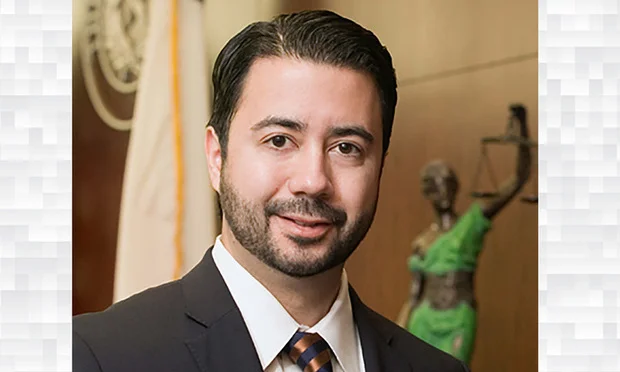
“Our firm was hit with fake negative reviews—two a day for months—designed to manipulate Google’s algorithm. Minc Law didn’t just stop the attacks; they helped us win a crucial appellate court victory, proving that online defamation can be fought and won.“
James Amaro
Attorney & Founder, Amaro Law Firm
Ready to Restore Your Good Name With
Newark Defamation Lawyer Services?
Speak to An Experienced Attorney Today
Why Choose Minc Law for Your Newark Defamation Matter?

Unmatched Expertise in New Jersey Defamation Law
We exclusively focus on defamation and reputation attacks, utilizing cutting-edge cyber investigation tools and legal strategies.

Proven Track Record of Success
We bring experience and innovation to the table, having successfully resolved thousands of cases and earned 7+-figure verdicts and settlements.

Trusted, Licensed Professionals
Our team handles each case with sensitivity, urgency, and care, ensuring that your unique needs are met with a personalized approach.






Frequently Asked Questions (FAQs)
Like doctors, attorneys often focus their practice on a particular field. If you have a complicated legal problem, just as if you had a complicated medical problem, you want to consult with an expert in that area.
It may be that your defamation case is straightforward. If that is the case, a lawyer who infrequently handles defamation cases may provide adequate legal representation. However, in nuanced and quickly changing areas of the law, like internet defamation, it is often preferable to choose a firm or lawyer who handles these types of cases on a daily basis.
Failure to hire an expert in defamation could lead to receiving substandard legal advice. It could also lead to overpayment. This is because you could be paying the lawyer to “learn the ropes.”
An experienced defamation attorney already knows the particularities of the jurisdiction’s rules, can quickly spot what your claims are, and can intuit what the defenses might be. Furthermore, they often already have established relationships that could lead to a quick take-down of materials or resolution outside of litigation.
The cost to bring a defamation lawsuit depends on numerous variables, including:
- A particular court’s filing fees,
- The lawyer’s billable rate and fee structure,
- Where the defamation took place and how extensive it is,
- The defamation law that applies to your case,
- The availability of evidence to prove your case,
- How easy it is to identify and find the defendant(s),
- Whether the defendant will contest your allegations,
- The amount of discovery needed,
- How long the litigation lasts,
- Whether time is of the essence,
- The need to hire local counsel and their billable rates,
- The number of court appearances required,
- The amount of monetary damages requested, and
- The kind of legal or non-legal relief requested.
As you can see, there is no simple answer to determining what your total defamation lawsuit cost will run you. But to help give you an idea of what to expect, here are a few rough numbers:
- On the low end, your defamation lawsuit may cost $5,000 to $7,500.
- On the upper end, trials in defamation cases may cost you between $30,000 and $60,000, with an average monthly cost of $4,000 to $6,000.
- The average defamation lawsuit often costs about $14,000 to $16,000 for most cases at Minc Law.
No, not all cases go to trial. Often, we can successfully remove defamatory content and resolve the matter without a trial. However, if litigation is necessary, we are fully prepared to represent you in court.
A question we are asked often by prospective clients at Minc Law is ‘How Long Does it Take to Sue For Defamation?’ Filing a defamation lawsuit is rarely a “quick fix” for your issue. The length of time it takes to resolve a defamation lawsuit can vary is and impacted by a variety of major factors, including:
- Whether you are seeking monetary relief,
- If the case is contested by the opposing party,
- If a defamer’s identity is unknown or known, and
- If the case proceeds all the way to trial.
At Minc Law, we find that roughly 90% of our defamation lawsuits take anywhere from 6 to 12 months from filing to full resolution.
Before hiring a defamation attorney to file a defamation lawsuit, we recommend that you ask yourself if you are willing to be patient.
Lawsuits involve several steps, each of which takes considerable time. If you proceed with a lawsuit, expect to work through the following procedures:
Initial Pleadings
Pleadings are formal documents filed with the court and can consist of complaints, answers, responses, motions, amendments, and counterclaims. Most state and federal courts allow anywhere from 30-60 days for the defendant to respond to an initial complaint once it has been served upon them. However, this timeline can extend greatly if motions to dismiss are filed before the Defendant responds.
Discovery
This is where all parties involved in a case get and disclose their evidence to decide if they should march towards trial or negotiate an early settlement.
State courts generally require discovery to be completed within 60-120 days after a pretrial conference (if applicable in your state) but motions for extension of time or stays can push this deadline back even further.
Dispositive Motions
Sometimes during litigation, special motions are filed that cannot be bypassed without a 30-60-minute hearing. Litigants can be given months to file these motions.
Many judges only have a limited number of slots available for these types of hearings, so they need to be scheduled in advance, sometimes as far as six months out, depending on the judge’s calendar.
Alternative Dispute Resolution (ADR)
Most states require ADR with a neutral third party before a trial is to take place.
This is the court’s last-ditch effort to make sure a matter cannot be settled before going in front of the judge. The most common forms of ADR are mediation and arbitration.
Trial
This is the final step of the litigation process and the most anticipated. There are six phases to a trial: choosing a jury, opening statements, witness testimony and examinations, closing arguments, jury instruction, and deliberation ending in a verdict.
The amount of time needed for a trial varies upon several different factors but usually takes between one and three weeks.
You probably would not want to sue someone if you did not stand to gain anything in the long run. After all, lawsuits can be costly and stressful.
Before you hire a defamation lawyer, you should consider what you stand to gain – and if it is the most appropriate action to resolve your defamation issue.
How Will Winning a Defamation Lawsuit Improve My Reputation?
Even if you do not own your own business, your online reputation matters. Did you know that most businesses check your social media before making a hiring decision? Chances are you already knew that. But you may not realize that even potential romantic partners will often Google you before a date.
That is right: your online reputation stands to affect the most important aspects of your life.
If search results for your name yield negative or defamatory content, it could impact both your love life and your earning capacity. It stands to reason, then, that winning a defamation lawsuit and removing negative online content could boost your reputation. When potential employers (or dates) search for you online, they will only find the non-defamatory information that you want them to find.
How Will Winning an Defamation Lawsuit Benefit My Business?
If you have a business, your online reputation arguably matters even more than an individual’s. Gone are the days when people patronized businesses simply because they are local or featured in the Yellow Pages.
Today, customers search out businesses online and they care about what they find. The importance of online reviews is ever increasing, and negative content can cause immeasurable damage. Defamatory content, in particular, has long been known to harm business owners (even before the internet). So, it behooves business owners to fight any negative content found online.
If false reviews and comments are hurting your business, a defamation lawsuit might be a lifeline to restore the name you have worked hard to establish. Not only can a lawsuit lead to the removal of negative content, but you can also be compensated for damages to your business’s reputation.
What Kind of Damages Are Awarded in a Defamation Lawsuit?
There are several different types of damages you can collect if you win a defamation lawsuit. In most defamation cases, a victim can recover the following defamation damages:
- Actual or compensatory damages – which reimburse you for actual losses, emotional distress, and reputational harm
- Nominal damages – which reimburse you a minimal amount that acknowledges you have suffered a legal wrong even if you do not prove actual damages
- Punitive damages – which are awarded to punish and deter wrongful conduct.
However, we have learned that potential clients are rarely concerned with the legal terms for damages. Instead, clients want to know exactly how they are going to collect on a judgment.
If the defamer has a regular income, you might be able to garnish wages directly out of their paycheck. Granted, both states and the federal government dictate if, how, and when you can garnish wages. Usually, you can only garnish up to 25% of the defamer’s disposable income. Occasionally defendants have insurance coverage for defamation lawsuits that can also provide relief.
Unfortunately, you cannot garnish social security, disability, retirement, child support, and alimony payments.
If the defamer has a bank account, you may be able to collect a from their checking, savings, money market, or mutual funds. To levy someone’s account(s), you will need some information first (like the name of the bank, routing number, and the account number). An attorney can usually determine this information through the court, if necessary.
Funds such as public benefits, retirement plans, and insurance proceeds are still exempt if they are kept in a personal account.
If the defamer owns real estate, you may also be able to record a lien against their property to collect your judgment. Likewise, you may be able to collect other assets like an inheritance, personal property, and an ownership interest in a business.
To get started, the process is straightforward:
1. You can reach out to us by calling us at (216) 373-7706, speaking with a chat agent, or filling out our online contact form.
2. Next, a Minc Law representative will reach out to you to better understand your legal issue, and determine if we are the right fit for your unique matter. From there, they will discuss scheduling your consultation with an attorney.
3. During your consultation, an attorney will evaluate your case’s potential, determine the best strategy, and discuss the expected costs and timeline to resolve your matter. If you decide to move forward with Minc Law, we will draft an engagement letter for your review/signature and then begin working on your case.
All in all, this process takes between 1-3 business days. Please feel free to reach out to us by any of the methods mentioned, and we’ll be ready to assist.
Your Confidential Consultation Awaits.
Get in touch with us and one of our dedicated intake specialists will be in touch to help within 24-48 hours. Watch this video to learn more about what will happen when you submit this form.

Site Search